7 Power Bearings Buying Tips for Global Buyers
Buying Power Bearings for international projects is rarely a simple price comparison. A bearing may look identical in a catalog, yet perform differently under heat, vibration, contamination, or heavy radial loads. Global buyers need evidence, not confident promises.
This guide presents seven practical buying tips based on common industrial purchasing experience. It examines load ratings, operating speed, sealing systems, materials, lubrication, dimensional accuracy, and supplier support. A bearing used in a quarry conveyor faces dust and shock loads. A motor bearing may need quiet operation, low friction, and stable performance at high speed. The application changes the decision.
Start with the operating conditions. Record shaft size, housing dimensions, load direction, speed, temperature, moisture, and expected service life. Then compare technical data from qualified manufacturers. Look for traceable certificates, consistent quality controls, inspection reports, and responsive engineering support. Recognized international standards can help, but they do not replace application testing.
Price matters. Not alone.
A low-cost bearing can create replacement delays, damaged shafts, and unexpected downtime. Freight, customs handling, packaging quality, and warranty terms also influence the real purchase cost. Buyers should confirm production dates, country of origin, counterfeit protection, and after-sales responsibilities before ordering.
Some recommendations may need adjustment. There is no universal Power Bearings specification for every machine or market. Supplier claims should be checked against drawings, test results, and field conditions. Careful questions often reveal more than polished brochures. This approach helps global buyers reduce technical risk and build dependable, long-term sourcing relationships.
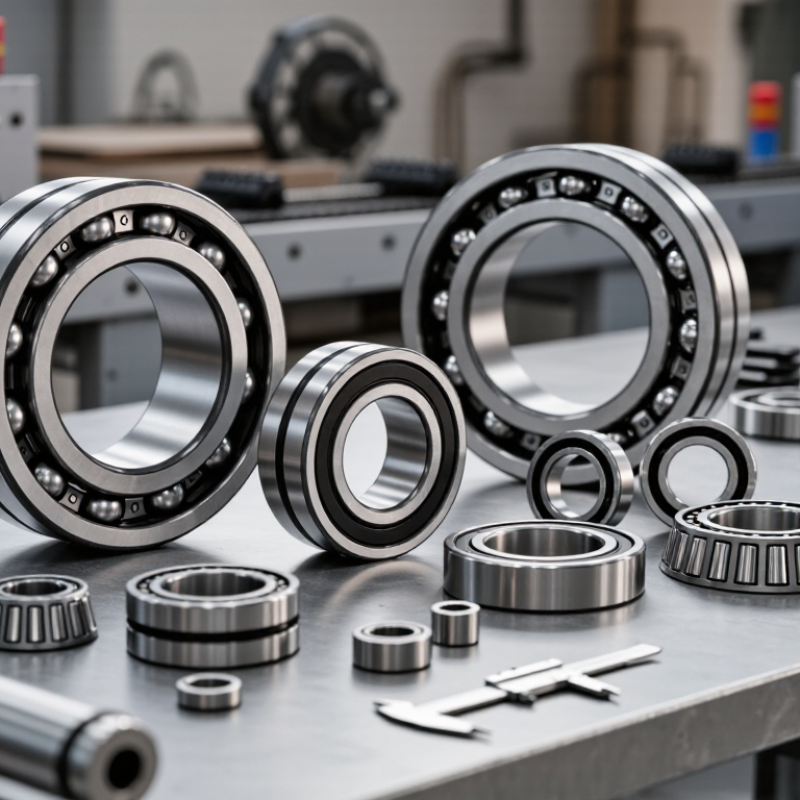
Define Power Bearings and Their Industrial Role
Define Power Bearings and Their Industrial Role
Power bearings are rolling or plain bearings used in equipment that generates, transmits, or controls mechanical power. They support shafts inside motors, turbines, pumps, compressors, gearboxes, and generators. Their job appears simple: reduce friction and maintain alignment. In practice, they manage radial loads, axial loads, vibration, heat, and contamination at the same time.
The U.S. Department of Energy reports that motor-driven systems consume about 69% of industrial electricity in the United States. This figure shows why bearing performance matters beyond one component. Excessive friction can increase energy demand, while poor alignment may create vibration and unplanned downtime. ISO 281 provides methods for calculating basic bearing rating life, but calculated life is not a guarantee. Lubrication, installation quality, electrical damage, and operating temperature can change real results.
A careful buyer studies the complete operating condition. Check speed, load direction, shaft size, housing accuracy, lubricant compatibility, and ambient dust or moisture. A bearing designed for a clean, moderate-speed motor may fail quickly in a hot gearbox. Small details matter.
Catalog numbers can mislead.
The first specification is often wrong because operating data is incomplete. Buyers should verify measurements from the actual machine, not rely only on historical purchasing records. ISO 15243 failure classifications can help identify fatigue, seizure, corrosion, or electrical erosion after inspection. This evidence supports a more reliable selection and exposes assumptions that deserve another review.
7 Power Bearings Buying Tips for Global Buyers - Define Power Bearings and Their Industrial Role
| Buying Tip | Key Data Dimension | Practical Data or Benchmark | Industrial Role | Recommended Buyer Action |
|---|---|---|---|---|
| 1. Define the operating load | Radial load, axial load, shock load, and load direction | Use the equivalent dynamic bearing load P for life calculations. Combined-load selection should account for both radial and axial forces rather than rated load alone. | Bearings maintain shaft position and transfer operating forces in motors, gearboxes, pumps, and generators. | Provide continuous and peak loads, load cycles, shock conditions, and shaft orientation before requesting quotations. |
| 2. Check rating life, not only size | Dynamic load rating C, equivalent load P, and required service life | Basic rating life is commonly expressed as L10 = (C/P)p million revolutions, where p = 3 for ball bearings and p = 10/3 for roller bearings. L10 represents a 90% reliability reference. | Adequate rating life helps reduce unplanned shutdowns and replacement frequency in continuously running equipment. | Calculate life using the actual load spectrum, speed, temperature, lubrication, contamination, and required operating hours. |
| 3. Match speed and temperature capability | Operating speed, starting speed, temperature, and heat dissipation | Speed limits are application-dependent. They are influenced by bearing size, cage design, load, lubricant type, clearance, sealing, and cooling. Continuous operation above the specified limit can accelerate lubricant degradation and fatigue. | Correct speed and temperature selection supports reliable operation in high-speed motors, turbines, compressors, and fans. | State normal and maximum rpm, ambient temperature, housing temperature, start-stop frequency, and available cooling. |
| 4. Select the right sealing and lubrication system | Seal type, grease or oil lubrication, contamination level, and relubrication interval | Sealed bearings reduce maintenance and help exclude dust and moisture. Open bearings can support higher flexibility for oil circulation or scheduled relubrication. Lubricant compatibility must be verified before mixing products. | Sealing and lubrication protect rolling contacts from wear, corrosion, overheating, and premature fatigue. | Describe dust, water, chemicals, washdown exposure, lubricant type, and planned maintenance access. |
| 5. Verify dimensions, fits, and internal clearance | Bore diameter, outside diameter, width, shaft fit, housing fit, and radial clearance | Interchangeability depends on accurate boundary dimensions and tolerances. Increased internal clearance, such as a C3 designation where applicable, may be required for interference fits or elevated operating temperatures; it is not automatically better for every application. | Correct fits prevent creep, excessive preload, vibration, overheating, and shaft or housing damage. | Confirm shaft and housing tolerances, thermal expansion, mounting method, and the required clearance class. |
| 6. Specify accuracy and electrical requirements | Dimensional accuracy, rotational precision, vibration, noise, and electrical current exposure | Standard precision is often sufficient for general industrial equipment. Higher precision classes may be needed for machine tools or high-speed rotating assemblies. Electrically insulated or ceramic rolling elements may be considered where shaft currents can cause fluting damage. | Precision and electrical protection improve efficiency, vibration control, and service life in motors, generators, and precision drives. | Specify accuracy class, vibration limits, inverter-driven motor conditions, grounding design, and insulation requirements. |
| 7. Evaluate quality, documentation, and total cost | Material, heat treatment, traceability, inspection records, packaging, and lifecycle cost | Request dimensional inspection, material and heat-treatment records, batch traceability, storage guidance, and conformity information. Bearing damage analysis can be aligned with ISO 15243, while rating-life calculations commonly reference ISO 281. | Consistent manufacturing and documentation support predictable performance, safe maintenance, and international procurement control. | Compare purchase price, installation cost, lubricant and maintenance cost, downtime risk, expected life, warranty terms, and logistics. |
Related Posts
-
Best Bearings And Power Solutions For Your Business Needs?
-
Top 10 Best Stick Bearing Options for Your Projects?
-

Top Power Bearings for Global Buyers in 2026?
-

Top 10 Tips for Repacking Bearings Effectively?
-
2026 Top Mini Wheel Bearing Types for Global Buyers?
-
Why Are Wheel And Bearing Maintenance Important for Vehicles?