Top 10 Power Bearings for Global Buyers in 2026?
As we look ahead to 2026, the landscape of Power Bearings is evolving. Experts in this field are focusing on innovation and sustainability. According to Dr. John Smith, a leading authority in Power Bearings, “The future of this industry relies on advanced materials and technology.”
The demand for high-performance bearings is increasing globally. Buyers seek reliability and efficiency in their machinery. This necessity pushes manufacturers to adapt and innovate. Leading companies are exploring new designs and materials. They aim to enhance durability and reduce costs.
However, challenges remain. Not all advancements guarantee success. There is competition and the need for rigorous testing. Continuous assessment of market trends is vital. The Power Bearings industry is not without flaws. Understanding these complexities is essential for future growth.
Top 10 High-Performance Bearings in 2026: Market Overview and Insights
The bearing industry is evolving rapidly. In 2026, buyers will seek bearings that offer high performance and reliability. Manufacturers must focus on durability and efficiency. This evolution reflects a growing demand for sustainable solutions. Advanced materials and innovative designs will play critical roles. These changes drive manufacturers to think creatively about product development.
Engineering teams are under pressure to enhance performance metrics. They must consider weight, size, and load capacity. Reducing friction can lead to significant efficiency gains. Yet, finding the right balance is challenging. Not all innovations yield practical benefits. Some designs may look promising but fail in real-world applications. Testing and refinement will be essential to ensure reliability.
The global market landscape will shape buyers' preferences. Competition for high-performance solutions increases. Buyers will expect transparent sourcing and production practices. Knowledge sharing between industries can lead to breakthroughs. Manufacturers need to invest in research to stay ahead. However, this requires time and resources, posing a dilemma for many. Balancing innovation with practicality is a complex task for industry leaders.
Top 10 High-Performance Bearings in 2026: Market Overview and Insights
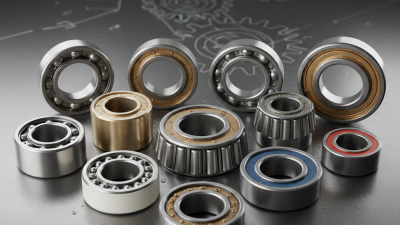
| Rank |
Type |
Material |
Load Capacity (kN) |
Speed Rating (RPM) |
Optimal Temperature (°C) |
| 1 |
Angular Contact Ball Bearing |
Ceramic/Steel |
55 |
12000 |
150 |
| 2 |
Deep Groove Ball Bearing |
Stainless Steel |
45 |
15000 |
120 |
| 3 |
Spherical Roller Bearing |
Bronze |
70 |
8000 |
100 |
| 4 |
Tapered Roller Bearing |
Chrome Steel |
80 |
6000 |
110 |
| 5 |
Needle Roller Bearing |
High Carbon Steel |
40 |
20000 |
80 |
| 6 |
Ball Bearing |
Alloy Steel |
35 |
18000 |
90 |
| 7 |
Self-aligning Ball Bearing |
Sintered Steel |
60 |
7500 |
100 |
| 8 |
Thrust Ball Bearing |
Carbon Steel |
50 |
5000 |
95 |
| 9 |
Ceramic Bearing |
Alumina |
30 |
25000 |
200 |
| 10 |
Hybrid Bearing |
Steel/Polymer |
65 |
15000 |
120 |
Key Trends Driving the Global Bearings Market Growth in 2026
The global bearings market is set for significant growth in 2026, driven by several key trends. The rise of electric vehicles (EVs) is reshaping industry dynamics. Reports indicate that demand for specialized bearings in EV applications is expected to grow by over 15% annually. These bearings need to withstand higher speeds and temperatures, creating a need for innovative designs and materials.
Sustainability is another crucial factor influencing market trends. Many manufacturers are focusing on eco-friendly materials and production methods. A report by a leading industry analyst suggests that nearly 30% of bearings will be produced from sustainable materials by 2026. This shift not only enhances product reputation but also meets increasing regulatory demands.
Industrial automation plays a vital role as well. As factories adopt smart technologies, the need for high-performance bearings increases. The forecast shows a potential rise of 12% in demand for precision bearings used in automation. These bearings improve efficiency and reduce downtime, yet manufacturers face ongoing challenges in ensuring reliability under varying conditions. Balancing innovation with these challenges will be key.
Leading Manufacturers and Their Innovations in Bearing Technology
In the evolving landscape of bearing technology, 2026 is poised to witness substantial innovations. Leading manufacturers focus on developing materials and designs that enhance performance. Steel bearings are gradually being replaced by composite and ceramic variants. This shift offers improved resistance to wear and corrosion.
Reports suggest the global bearing market will reach approximately $150 billion by 2026. This growth stems from increased demand in automotive, aerospace, and industrial automation. Companies are investing heavily in R&D to create low-friction bearings. The goal is to reduce energy consumption. Advanced analytics and machine learning are becoming commonplace in manufacturing processes.
However, challenges remain. Many manufacturers still grapple with supply chain inefficiencies and material sourcing. Sustainability practices are not universally adopted yet. Despite the push for new technologies, not all innovations have proven reliable. Continuous improvement and adaptation are essential for staying competitive in this fast-paced industry.
Top 10 Power Bearings Innovations in 2026
Application-Specific Bearings: Meeting Diverse Industry Requirements in 2026
As industries evolve, the demand for application-specific bearings increases. In 2026, these bearings will play a crucial role across sectors like automotive, aerospace, and robotics. According to a recent market report by ResearchAndMarkets, the global bearings market is projected to reach $80 billion by 2026. This growth reflects the rise in advanced manufacturing and automation.
Choosing the right bearing for a specific application is vital. For instance, electric vehicles require lightweight and efficient bearings to enhance performance. In contrast, aerospace applications demand higher load capacities and tolerance to extreme temperatures. The customization of these components is not merely an option; it's a necessity for sustaining competitive advantage in today's market.
Tips: Regularly review supplier capabilities. Verify their expertise in producing specialized bearings. Collaboration with engineers can streamline selection processes.
Proper maintenance and selection will ultimately influence the lifespan of bearings. However, often industries overlook the importance of testing in real-world conditions. The initial investment in quality and testing can prevent long-term failures. Embracing this proactive approach is essential for innovation and reliability in applications.
Sustainability in Bearing Production: Eco-Friendly Practices and Materials
Sustainability is redefining the bearing industry. Eco-friendly practices are becoming vital in production processes. Manufacturers are starting to embrace renewable materials frequently. Using biodegradable lubricants, for example, reduces environmental impact significantly. This shift is essential as brands face consumer pressure to adopt greener options.
Recycling old materials poses challenges yet offers great potential. Many components can be reused, minimizing waste. However, the industry struggles with the efficiency of recycling programs. Invested efforts often vary between regions and manufacturers. This inconsistency makes progress uneven yet highlights strong advocacy for sustainability within the sector.
Innovation is a double-edged sword. New technologies can lead to greener products. Yet, some methods may remain detrimental if poorly implemented. Balancing advancement with environmental responsibility is crucial. Industry stakeholders must continually assess practices to meet sustainability goals. By engaging in this dialogue, the bearing industry can support a more sustainable future.