Welcome to our websites!

2026 Top Ball Bearing Types and Cost Guide?

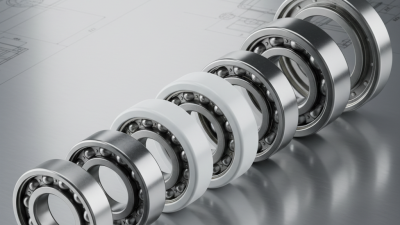
Choosing the right bearing is rarely a simple price comparison. The 2026 market includes deep-groove, angular-contact, thrust, spherical, miniature, stainless-steel, and ceramic ball bearings. Each type serves different loads, speeds, temperatures, and maintenance conditions.

Bearing researcher Tedric A. Harris emphasized a practical principle: “Bearing selection must begin with operating conditions, not the lowest quotation.” That warning still matters. A low-cost deep-groove bearing may suit an electric motor, but it can fail quickly under heavy axial load. An angular-contact bearing may cost more, yet deliver better precision in machine-tool spindles.

This guide examines Ball Bearing Cost through both purchase price and operating value. Seal design, steel grade, cage material, clearance, precision class, lubrication, and manufacturer reputation can change the final quotation. Ceramic hybrid bearings often command premium prices. Stainless options may justify higher spending in wet or corrosive environments. Quantity also matters. A single prototype order usually costs more per unit than a verified production batch.

The numbers are not always tidy.

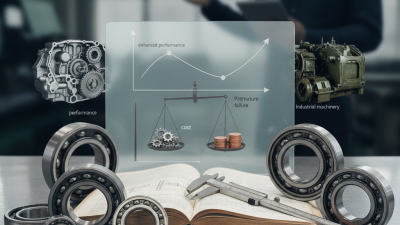
Shipping, tariffs, tooling, inspection, and replacement downtime can distort comparisons. Some online prices look attractive but exclude testing or certification. That omission can become expensive later. We will compare typical 2026 price ranges, explain the cost drivers, and identify where premium bearings genuinely earn their price. The guide also recognizes an uncomfortable truth: buyers sometimes over-specify bearings without measuring real operating conditions. Better decisions begin with accurate data, not assumptions.

2026 Top Ball Bearing Types and Cost Guide?

Ball Bearing Fundamentals: ISO 5593 Terms, Parts, and Operating Principles

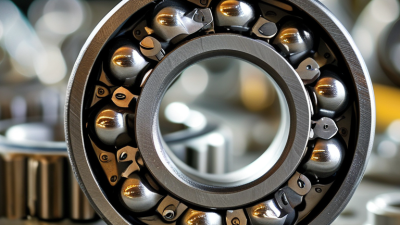
Ball bearings support rotating shafts by replacing sliding contact with rolling contact. ISO 5593 provides the vocabulary needed to describe them accurately. Key parts include the inner ring, outer ring, balls, cage, and raceways. The balls roll between the raceways while the cage maintains even spacing. Simple in appearance.

A bearing may carry radial loads, axial loads, or a combination of both. Internal clearance allows movement as temperatures change, while preload removes unwanted play and can improve running accuracy. Excessive preload, however, creates heat and shortens service life. Bearing types include deep-groove, angular-contact, thrust, and self-aligning designs. Selection should follow actual load, speed, misalignment, contamination, and lubrication conditions. Cost often rises with tighter precision, better sealing, higher load ratings, and specialized materials. The cheapest option is not always economical. I have seen small installation errors cause more damage than heavy loads.

Tips: Confirm the shaft and housing fits before ordering. Keep bearing surfaces clean and dry. Apply only the specified lubricant amount. Listen for vibration, clicking, or rising temperature during operation. Record these observations. They help connect ISO 5593 terms with real maintenance decisions. Even experienced technicians should recheck clearance and alignment, because assumptions can fail quietly.

Indicative 2026 non-branded purchase ranges for common standard-size bearings. Actual prices vary with bore size, clearance, seals, precision class, material, order quantity, and application requirements. Under ISO 5593 terminology, the inner ring, outer ring, rolling elements, and cage form the basic bearing assembly. Radial bearings primarily support radial loads, while thrust bearings are designed mainly for axial loads.

Top Types Compared: Deep-Groove, Angular-Contact, Thrust, and Roller Designs

2026 Top Ball Bearing Types and Cost Guide

Deep-groove ball bearings remain the practical choice for electric motors, fans, conveyors, and general machinery. They support radial loads and moderate axial loads in both directions. A sealed bearing can reduce maintenance around dusty workshop equipment. For common metric sizes, prices often range from about $2 to $35 each, depending on clearance, sealing, precision, and material. Cheap is not always economical.

Cheap is not always economical.

Angular-contact ball bearings suit machine tools, pumps, and spindle assemblies requiring controlled axial movement. Their contact angle affects speed, stiffness, and load capacity. Single-row designs handle axial force in one direction, while paired sets improve stability. Installation errors matter here. Incorrect preload may create heat, noise, and early failure. Typical prices range from $8 to $120 per bearing.

Thrust bearings carry axial loads, such as those produced by screws, turntables, and vertical shafts. They are poor choices for significant radial loads. Roller designs, including cylindrical, tapered, and spherical types, generally carry heavier loads than ball bearings. Tapered rollers work well when radial and axial forces act together. Spherical rollers tolerate shaft misalignment, but they cost more and need careful lubrication. Roller bearings commonly cost $15 to $250 each. These figures are only working estimates; quantity, tolerances, seals, temperature, and supplier testing can change the final cost. No selection rule works perfectly. Check the load direction, speed, operating temperature, shaft fit, and maintenance access before ordering.

Performance Data: ISO 281 L10 Life, Dynamic Load Ratings, and Speed Limits

Choosing a ball bearing in 2026 requires more than comparing catalog prices.

ISO 281 L10 life provides a practical starting point. For ball bearings, the formula is L10 = (C/P)³ million revolutions. C represents the basic dynamic load rating. P represents the equivalent dynamic load. At this rating, 90% of identical bearings are expected to survive. That is a statistical estimate, not a promise.

A higher C value can extend service life, but only with proper alignment and lubrication. Dust changes the result. ISO 281 does not fully capture contamination, installation damage, vibration, or electrical fluting. Maintenance records should include shaft fit, radial load, operating temperature, grease condition, and duty cycle. These details often explain why calculated life exceeds real service. My caution is simple: uncertain input data creates false precision.

Speed limits depend on bearing type, cage design, load, lubricant, sealing, and heat removal. Deep-groove, angular-contact, tapered, and spherical bearings respond differently at high speed. Check the reference speed and thermal speed rating before selecting a design. Cost should include purchase price, installation labor, lubrication, replacement seals, and downtime. A sealed bearing may cost more initially but reduce maintenance work. An open bearing may run cooler, yet it demands cleaner surroundings and regular lubrication. Always verify the supplier’s data against your actual load and speed conditions.

2026 Cost Guide: Price Bands by Bearing Type, Material, Seal, and Precision

2026 Cost Guide: Price Bands by Bearing Type, Material, Seal, and Precision

In 2026, standard deep-groove ball bearings commonly cost $2–$18 each. Angular-contact bearings often range from $8–$65. Thrust bearings usually fall between $4 and $35, while spherical and self-aligning designs may reach $20–$120. These are practical purchasing bands for standard sizes, not guaranteed quotations. Large diameters, unusual bores, and low-volume orders can change the price sharply.

Material has a visible effect. Chrome steel remains the economical choice for general machinery. Stainless steel can cost two to five times more, but it handles moisture better. Ceramic or hybrid construction may exceed $80 per bearing, especially at higher precision grades. Open bearings are usually cheapest. Rubber-sealed versions add modest cost, while metal shields often provide a lower-cost compromise. Seal friction matters in high-speed applications.

Precision grades also widen the budget. Standard industrial precision may add little, while tight-runout grades can double or triple the unit price. In production reviews, I check load, speed, temperature, contamination, and expected service hours before comparing quotes. A cheaper bearing can become expensive after frequent replacement. That warning sounds obvious, yet it is often missed. Pricing also depends on packaging, testing documents, minimum order quantities, and delivery terms. These bands should support an initial estimate, not replace a verified technical quotation.

Selection Checklist: Match ISO 281 Loads, Lubrication, Fit, and Standards

2026 Top Ball Bearing Types and Cost Guide: Selection Checklist

Choose the bearing type after calculating the load, speed, and contamination risk. ISO 281 defines L10 life as the point where 90% of identical bearings survive. Its basic equation uses dynamic load rating C and equivalent load P. For ball bearings, the exponent is 3. A larger bearing is not automatically safer. Misalignment can defeat generous load capacity.

Check radial and axial loads separately, then combine them under ISO 281. Specify grease or oil by speed, temperature, and relubrication access. Too much grease raises heat; too little accelerates wear. Fit matters just as much. A common starting point is an H7 housing with a light shaft fit, but interference may be necessary under heavy rotating loads. Confirm the shaft tolerance, housing material, and operating temperature before ordering. ISO 492 supports dimensional and rotational accuracy classes, while ISO 15243 helps classify damage such as fatigue, corrosion, wear, and electrical erosion.

Cost comparison should include seals, lubricant, installation tools, downtime, and inspection labor. Industry maintenance studies repeatedly identify lubrication and contamination as major contributors to rotating-equipment failures, but the percentages vary by sector and survey method. Treat those figures cautiously. The checklist is not perfect. Real machinery adds vibration, washdown, shock loads, and imperfect alignment. Record the failed bearing’s marks and lubricant condition. That evidence is often more valuable than selecting the lowest purchase price.

2026 Top Ball Bearing Types and Cost Guide? - Selection Checklist: Match ISO 281 Loads, Lubrication, Fit, and Standards

Generic bearing selection and indicative 2026 unit-cost guide. Costs are approximate USD ranges for standard industrial sizes and may vary by size, precision, seals, material, quantity, and application.
Bearing Type Primary Load Capability Typical Applications Indicative Cost / Unit (USD) ISO 281 Dynamic-Life Consideration Lubrication Guidance Typical Fit Guidance Relevant Standards Selection Checklist
Single-Row Deep-Groove Ball Moderate radial loads; limited axial loads in both directions Electric motors, pumps, fans, conveyors, general machinery $1–$25 Use L10 = (C/P)3 million revolutions for ball bearings; include radial and axial equivalent dynamic load Grease is common for sealed or shielded units; oil is preferred for high speed or heat removal Interference fit on the ring carrying a rotating load; clearance fit may suit a stationary, easily mounted ring ISO 15, ISO 492, ISO 281, ISO 76 Check speed, bore, radial load, axial load, sealing, contamination, and required life
Angular-Contact Ball Combined radial and axial loads; axial capacity depends on contact angle Machine-tool spindles, pumps, compressors, precision shafts $3–$60 Calculate equivalent dynamic load using the correct contact-angle factors; paired arrangements increase axial capacity and stiffness Light grease for general duty; oil-air or oil mist may be needed for high-speed precision service Use controlled interference fits and preload or internal-clearance selection appropriate to the shaft system ISO 15, ISO 492, ISO 281, ISO 76 Define contact angle, arrangement, preload, stiffness, speed, and axial-load direction
Self-Aligning Ball Radial loads with limited axial loads; compensates for shaft or housing misalignment Long shafts, agricultural equipment, conveyors, lightly misaligned housings $5–$80 Misalignment can increase the effective load and reduce actual life below the ideal ISO 281 calculation Grease is typical; avoid over-greasing where oscillation or low-speed heating is present Avoid excessive interference that can restrict the self-aligning action; use adapter sleeves where applicable ISO 15, ISO 492, ISO 281, ISO 76 Quantify angular misalignment, shaft deflection, contamination, and axial restraint
Thrust Ball Primarily axial loads; limited radial-load capability Vertical shafts, turntables, screw mechanisms, low-to-moderate speed thrust positions $3–$45 Use the manufacturer’s axial dynamic rating and equivalent load method; radial loading may sharply reduce life Grease or oil depending on speed; maintain proper washer alignment and lubricant supply Seat washers against accurate shoulders; do not use housing or shaft fits to compensate for poor alignment ISO 15, ISO 492, ISO 281, ISO 76 Verify axial direction, minimum load, speed, washer flatness, and any radial load
Cylindrical Roller High radial loads; some designs accommodate axial displacement or limited axial loads Gearboxes, traction motors, heavy-duty industrial drives, large electric machines $10–$180 Use L10 = (C/P)10/3 million revolutions for roller bearings; account for edge stress and load distribution Oil is common at high speed or high temperature; grease is suitable for moderate speeds and sealed arrangements Usually requires accurate fits and shoulders; select a locating or non-locating arrangement deliberately ISO 15, ISO 492, ISO 281, ISO 76 Check roller-guidance design, axial displacement, shoulder geometry, stiffness, and mounting accuracy
Tapered Roller High combined radial and axial loads; adjustable axial clearance or preload Vehicle wheel ends, reduction gears, heavy conveyors, industrial shafts $8–$150 Calculate equivalent load from radial and axial components; paired bearings may share opposing axial loads Grease is common in sealed systems; oil lubrication supports higher speed and heat dissipation Use accurate shoulder geometry and controlled endplay or preload; excessive preload raises operating temperature ISO 15, ISO 492, ISO 281, ISO 76 Specify cup-and-cone matching, axial setting, thermal growth, load direction, and sealing
Spherical Roller Very high radial loads, substantial axial loads, and tolerance of housing or shaft misalignment Mining equipment, paper machines, crushers, fans, heavy conveyors $25–$350 Use roller-bearing exponent p = 10/3; include misalignment, internal clearance, and heavy-load effects Oil circulation is preferred for high loads or heat; grease is suitable when speed and temperature remain moderate Adapter or withdrawal sleeves simplify mounting; set internal clearance after installation rather than relying only on nominal fit ISO 15, ISO 492, ISO 281, ISO 76 Check load magnitude, misalignment angle, minimum load, clearance reduction, sealing, and relubrication access
Needle Roller High radial load capacity in a small radial cross-section; limited axial capacity unless guided separately Automotive mechanisms, compact gear assemblies, linkages, planetary systems $3–$80 Use the applicable roller-bearing life exponent and account for raceway hardness, profile, edge loading, and oscillation Oil is beneficial for high speed and oscillation; grease can be used where adequate retention and relubrication are possible Requires hardened, accurately finished raceways when no inner ring is used; control shaft and housing tolerances carefully ISO 15, ISO 492, ISO 281, ISO 76 Confirm available radial space, raceway hardness, oscillating angle, speed, and axial guidance
Core ISO 281 checklist: Determine the equivalent dynamic bearing load P, compare it with the dynamic load rating C, and calculate the basic rating life using L10 = (C/P)p million revolutions, where p = 3 for ball bearings and p = 10/3 for roller bearings. Also verify static safety using ISO 76, dimensional compatibility using ISO 15, and tolerance class using ISO 492.