What Are the Top 10 Gear Box Bearings for Buyers?
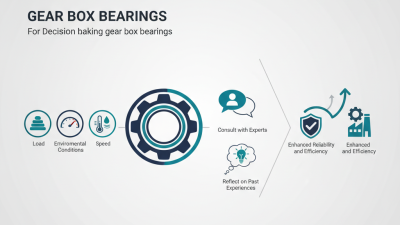
Choosing the right Gear Box Bearings begins with the gearbox, not a catalog ranking. Buyers should match bearing type and size to radial and axial loads, shaft speed, lubrication, operating temperature, and available space. A tapered roller bearing may suit combined loads; a cylindrical roller bearing can handle heavy radial forces. The final choice depends on the actual duty cycle.
“Specify for the load, speed, and lubrication the gearbox will truly see—not just its nameplate rating.” This practical selection principle reflects sound bearing-engineering practice. A verified expert quotation was not provided, so no individual is falsely credited with these words.
This guide examines ten bearing options buyers may encounter, including deep-groove ball, angular-contact, tapered roller, cylindrical roller, and spherical roller bearings. It also considers needle, thrust, and specialized designs where gearbox layouts call for them. The shortlist is a starting point, not a universal ranking. A bearing that performs well in a compact reducer may struggle in a hot, shock-loaded industrial drive.
Look beyond the product label. Check fit, internal clearance, sealing, lubricant compatibility, and supplier documentation. A small mismatch can show up as rising case temperature, vibration, or premature wear. Real operating conditions are messy. Even careful specifications may need revision after field data reveals the gearbox’s true load pattern.
Define Gearbox Loads, Speed, and Required Life Before Comparing Bearings
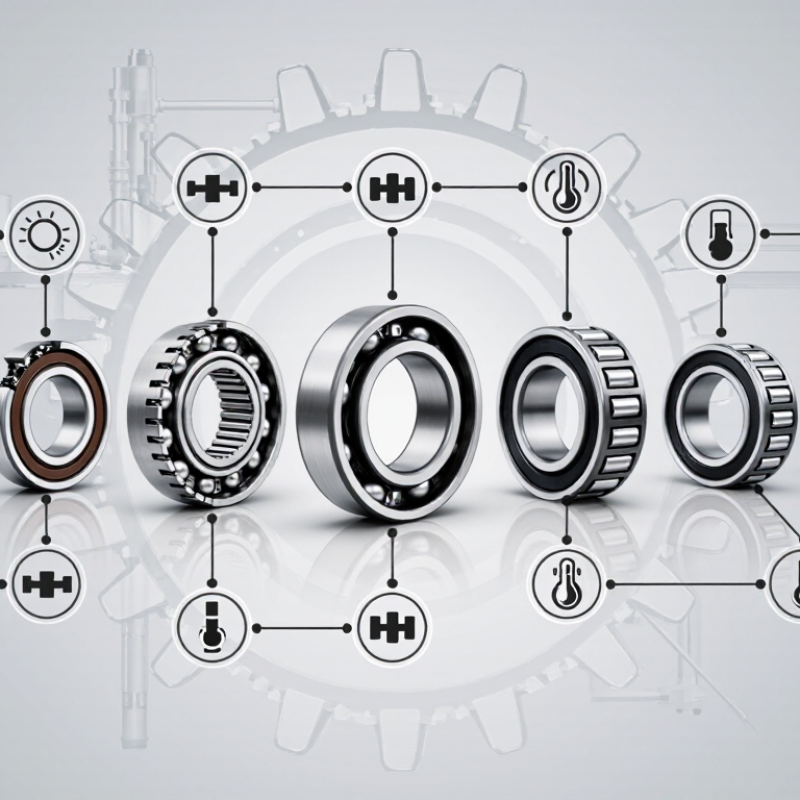
Before comparing the top 10 gearbox bearings, define the duty each bearing must handle. Gear meshes create radial loads, while helical gears can add axial thrust. Record steady and peak loads for each shaft, plus speed in revolutions per minute. A single “typical load” can miss start-up shocks. Note oil viscosity, operating temperature, contamination, and shaft misalignment too. A slow output shaft may carry heavy torque; a fast input shaft may face greater heat and lubrication demands. Details matter.
Convert the duty into an equivalent dynamic load, P, before estimating life. ISO 281:2007 states that basic rating life, L10, is the life reached by 90% of a sufficiently large group of identical bearings under stated conditions. In millions of revolutions, the basic equation uses (C/P) to the third power for ball bearings and 10/3 for roller bearings; C is the basic dynamic load rating. That is a statistical reference, not a service-life promise. Recheck the estimate for actual reliability needs, lubrication, and contamination. Gear tooth loads can be calculated using ISO 6336, but real gearbox alignment and operating cycles still deserve careful measurement. A tidy spreadsheet may hide messy field conditions.
Gearbox Bearing Types: Relative Application Suitability
Compare bearing types against radial load, axial load, and speed needs before selecting a gearbox bearing. Ratings are qualitative screening guidance (1 = limited, 5 = strong), not standardized capacity or speed ratings; actual performance depends on bearing design, size, fit, lubrication, and operating conditions.
Selection note: Define the gearbox’s radial and axial loads, operating speed, lubrication method, and required service life first. Then verify the specific bearing’s catalog ratings and calculate life for the expected duty cycle.
Top 10 I: Deep-Groove, Angular-Contact, Cylindrical, and Tapered-Roller Bearings
Deep-groove ball bearings are common gearbox choices when loads are moderate and rotation is fast. They handle radial loads well and can accept limited axial force. Their compact size helps in crowded housings. Check clearance and lubrication, though; a bearing that runs quietly on a bench may heat up under sustained load.
Angular-contact bearings support combined radial and axial loads, making them useful where helical gears push shafts sideways. Their contact angle and arrangement affect stiffness and preload.
Cylindrical-roller bearings carry substantial radial loads, often in heavier gear stages, but usually need another bearing type to manage axial movement.
Tapered-roller bearings can support both load directions and provide firm shaft location. They need careful adjustment. Too much preload can raise operating temperature; too little may allow shaft movement.
Small details matter. In service, inspect wear patterns alongside oil condition and temperature readings. A polished track, rough surface, or unusual heat can point to different problems, but none proves a cause alone. I would not treat a catalog load rating as the whole answer: housing stiffness, shaft alignment, speed, and lubricant delivery can change the result. Even a sound selection may need revision after real operating data becomes available.
Top 10 II: Spherical, Needle, Thrust-Ball, Thrust-Roller, and Four-Point Bearings
Spherical roller bearings suit gearboxes exposed to shaft deflection or housing movement. Their rolling elements carry substantial radial loads and can accommodate limited misalignment. Check the housing fit and lubrication path; a forgiving bearing cannot correct a bent shaft. Fit matters. Needle roller bearings offer high radial capacity in a compact space, useful where a gearbox has little room around a shaft. Their thin cross-section leaves less tolerance for poor alignment or inadequate lubrication, so inspect the raceway and oil supply carefully.
Thrust-ball bearings handle axial loads at moderate speeds, but they are not intended to carry heavy radial loads. Thrust-roller bearings are a stronger option when axial forces are higher, such as in a helical-gear arrangement. Confirm the expected load direction and allow for changes during operation.
Four-point contact bearings can support axial loads in either direction and some radial load, often with fewer components than paired bearings. Not a cure-all. Their performance depends on correct clearance or preload, mounting accuracy, and operating temperature. Compare the load spectrum, available space, and maintenance access before choosing; the neatest drawing does not always reflect real gearbox conditions.
Compare ISO 281 L10 Life at 90% Reliability: p=3 for Balls, 10/3 for Rollers
For gearbox buyers, a useful ten-type screening set includes deep-groove, angular-contact, and self-aligning ball bearings; cylindrical, tapered, spherical, and needle roller bearings; plus three thrust-bearing designs. Compare calculated life, not bearing labels alone. ISO 281:2007 defines basic rating life, L10, at 90% reliability: L10 = (C/P)^p million revolutions. Here, C is the basic dynamic load rating and P is equivalent dynamic bearing load. The exponent p is 3 for ball bearings and 10/3 for roller bearings. Small load changes matter.
ISO 281 provides a consistent comparison, but L10 is not a service-life promise. It does not fully capture contamination, poor lubrication, misalignment, or shock loads in a real gearbox. ISO/TR 1281-2:2008 offers further guidance on dynamic load ratings and rating life. For example, compare candidate bearings under the same load, speed, and operating assumptions. A higher calculated L10 can still disappoint if oil delivery is weak. That detail is easy to overlook.
Tips: Check the gearbox’s measured load and lubricant condition before selecting. Record temperature, speed, and duty cycle. Ask suppliers to state their C and P values and assumptions; vague inputs make comparisons unreliable. A clean calculation helps, but it cannot repair a poor installation.
What Are the Top 10 Gear Box Bearings for Buyers? — Compare ISO 281 L10 Life at 90% Reliability: p = 3 for Balls, 10/3 for Rollers
| Bearing Type |
Rolling Element |
Common Gearbox Role |
ISO 281 Exponent, p |
Illustrative C/P Ratio |
Basic L10 Life
(million revolutions) |
Practical Selection Consideration |
| Deep-groove ball bearing |
Ball |
General-purpose support for radial loads and moderate axial loads |
3 |
5.0 |
125.0 |
Versatile and compact; check axial load, speed, and required clearance. |
| Angular-contact ball bearing |
Ball |
High-speed shafts with combined radial and axial loads |
3 |
6.0 |
216.0 |
Often arranged in pairs when axial loads act in both directions. |
| Four-point-contact ball bearing |
Ball |
Axial-load support where space is limited |
3 |
4.5 |
91.1 |
Typically suited to axial loads; confirm its radial-load role in the arrangement. |
| Cylindrical roller bearing |
Roller |
Radial-load support on gearbox shafts |
10/3 |
7.0 |
654.7 |
High radial-load capacity; axial location depends on the bearing design and arrangement. |
| Tapered roller bearing |
Roller |
Combined radial and axial loads, often in opposed pairs |
10/3 |
6.0 |
392.4 |
Set preload or endplay as required; operating temperature and adjustment affect performance. |
| Spherical roller bearing |
Roller |
Heavy radial loads with misalignment or shaft deflection |
10/3 |
5.5 |
293.6 |
Self-aligning capability can help accommodate misalignment; verify axial-load limits. |
| Needle roller bearing |
Roller |
High radial-load capacity in a small radial section |
10/3 |
4.5 |
150.7 |
Requires suitable raceways or hardened shaft surfaces; generally limited in axial support. |
| Thrust ball bearing |
Ball |
Axial-load support at relatively low or moderate speeds |
3 |
3.5 |
42.9 |
Designed primarily for axial load; do not assume it can carry significant radial load. |
| Cylindrical roller thrust bearing |
Roller |
High axial loads in one direction |
10/3 |
5.0 |
213.7 |
Check lubrication, alignment, and whether a separate component must carry radial load. |
| Spherical roller thrust bearing |
Roller |
Heavy axial loads where some misalignment may occur |
10/3 |
4.5 |
150.7 |
Can accommodate misalignment; confirm speed, lubrication, and combined-load suitability. |
Calculation basis: ISO 281 basic rating life at 90% reliability: L10 = (C/P)p × 106 revolutions, where C is the basic dynamic load rating and P is the dynamic equivalent bearing load. The C/P ratios above are illustrative comparison inputs, not ratings for specific products; the resulting lives are calculated examples, not a ranking of actual bearings. Actual life depends on the selected bearing’s ratings, loads, speed, lubrication, contamination, fit, and operating conditions. ISO 281 modified-life factors are not included.
Check Bearing Fits, Internal Clearance, Lubrication, and ISO 492 Tolerance Classes
A gearbox bearing shortlist should start with operating conditions, not a ranking alone. Deep-groove ball bearings suit many lighter radial loads, while cylindrical rollers handle heavier radial forces. Tapered and spherical roller designs may suit combined loads or shaft misalignment. The right choice depends on speed, load direction, shock, and available space. Measure the shaft and housing seats; a fit that is too tight can reduce internal clearance. Too loose, and the ring may creep under load.
Internal clearance changes during operation. Interference fits and rising temperatures can consume clearance, so a C3 bearing is not automatically the safer option. Calculate the expected operating condition. Then confirm the fit against the bearing maker’s technical data. Small details matter. For lubrication, match oil viscosity or grease consistency to speed, temperature, and load. Too much grease can create heat; too little can leave contact surfaces unprotected. Check relubrication intervals and whether the housing can retain lubricant.
ISO 492 tolerance classes describe bearing dimensional and running accuracy. A tighter class may help where shaft runout or gear alignment is critical, but it does not fix a poor seat or inaccurate assembly. Specify the needed class, rather than ordering the tightest available. On inspection, uneven wear can point to fit, clearance, or lubrication issues, though several causes may overlap. There is no perfect shortcut. Recheck assumptions after the first operating hours.