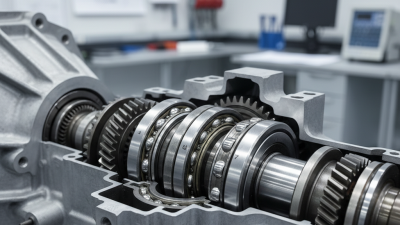
Choosing the right Ranger Bearings requires more than matching a product number. The correct choice depends on load, rotation speed, temperature, contamination, available space, and installation accuracy. A bearing that fits the housing may still fail under heavy towing, repeated vibration, or dusty road conditions. Check the vehicle manual and the original bearing markings before ordering.
Market data shows why careful selection matters. Grand View Research estimated the global bearing market at approximately USD 132.3 billion in 2023. Fortune Business Insights reported a lower estimate of USD 124.9 billion for the same year. The difference is significant. It reflects varying definitions, product categories, and research methods. Data requires judgment.
For Ranger Bearings, buyers should compare radial and axial load ratings, dynamic fatigue life, seal design, clearance, and lubrication requirements. A sealed bearing can protect against mud and water near a wheel hub. However, excessive heat or incorrect preload may still shorten its service life. ISO 281 provides a recognized method for calculating bearing rating life, while ISO 15243 helps classify common damage patterns.
Look closely at the application. Is the bearing supporting a wheel, driveline, pulley, or industrial shaft? Measure the shaft diameter, housing bore, and bearing width with calibrated tools. Record unusual noise, uneven wear, or metal dust before replacement. Small details matter.
A practical mistake is trusting price alone. Another is assuming every “Ranger” part has identical specifications. Verify the manufacturer, tolerance class, seal material, and traceability. When uncertain, consult an experienced distributor or bearing engineer. A perfect selection is not always possible, but a documented decision is far more reliable.
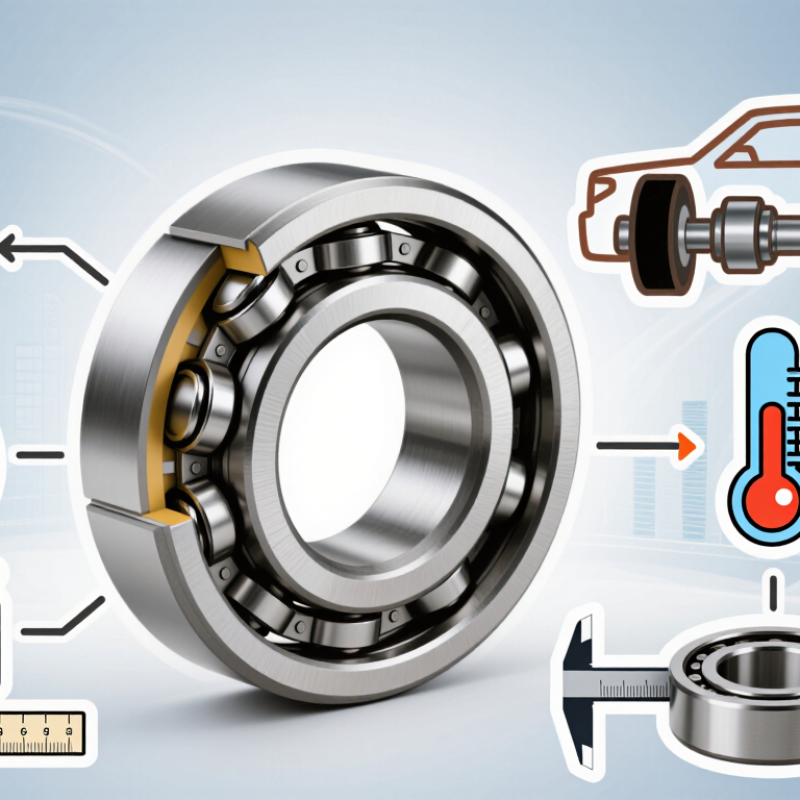
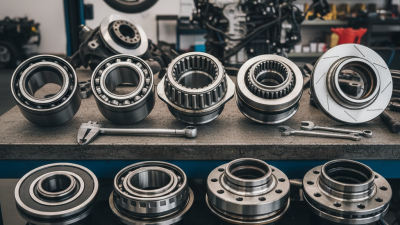
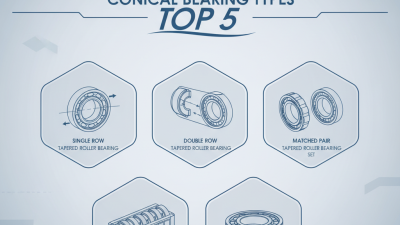
Choosing the right Ranger bearing starts with identifying its operating role. A deep-groove ball bearing suits radial loads and moderate axial loads. Tapered roller bearings handle combined loads, especially where wheel or shaft forces change direction. Spherical roller bearings tolerate misalignment and heavy radial loads. Thrust bearings are designed mainly for axial force. The wrong type may run smoothly at first, then fail under real working conditions.
Measure the shaft diameter, housing bore, and available width before selecting a size. Bearing dimensions are usually listed as bore, outside diameter, and width in millimetres. Do not rely on a visual estimate. One millimetre matters. Check the fit between the inner ring and shaft, then inspect housing alignment. Seals also deserve attention. Contact seals protect against dust, while open bearings may need a controlled lubrication system. In field inspections, contamination causes more trouble than many users expect.
Load ratings require careful reading. The dynamic load rating, C, is expressed in kN and relates to rotating fatigue life. The static load rating, C0, also uses kN and helps assess permanent deformation during heavy or stationary loading. Compare both values with calculated radial and axial forces. For slow movement, shock loads, or vibration, add a suitable safety margin. A rating is not a guarantee of service life. Temperature, lubrication, mounting pressure, and dirt can change the result. A common mistake is choosing the largest bearing available. Bigger is not always better. Verify the calculation with current technical tables before installation.
Choosing the right Ranger bearing starts with operating temperature, not just the catalogue number. At 150°C, ordinary grease can thin, oxidize, or migrate from the raceway. That small change may create noise, friction, and premature wear.
Measure temperature near the bearing. Ambient readings can mislead. A housing beside a furnace may feel cooler than the rotating inner ring. Record load, speed, moisture, dust, and cleaning chemicals before selecting the seal.
For temperatures approaching 150°C, high-temperature rubber seals may suit moderate speeds and clean environments. However, seal limits must match the actual duty cycle, not only the peak reading. Frequent heat spikes can harden elastomers and reduce contact pressure.
Metal shields often tolerate heat better and create less drag. They provide less protection against liquid water and fine contaminants. Non-contact seals can reduce friction, but they need a reasonably clean installation. There is no universal winner.
Choose bearing steel and cage materials with the same care. Heat-stabilized components can help control dimensional changes during continuous operation. Use lubricant rated above the measured working temperature, with suitable load and speed limits.
I would check the lubricant data twice; “high-temperature” labels can hide narrow conditions.
Inspect the bearing after initial running for discoloration, leakage, roughness, or rising vibration. A practical trial under real load may reveal problems that a specification sheet misses.
ABEC precision classes describe dimensional accuracy, not total bearing quality. A higher class may improve runout control in high-speed equipment. It does not automatically increase load capacity or service life. For general machinery, a moderate ABEC class often provides dependable performance. Check shaft size, housing fit, and rotating speed before paying for tighter tolerances.
Clearance deserves equal attention. Internal clearance allows expansion when the bearing becomes hot during operation. Standard clearance suits many moderate-temperature applications. Greater clearance, such as a C3 fit, may help with heat and higher speeds. Too much clearance can cause vibration, noise, and uneven load distribution. Measure the operating temperature, not only the room temperature.
Speed ratings also need careful interpretation. Sealed bearings may run slower than open bearings because seals create friction. Heavy loads, poor lubrication, misalignment, and dust can reduce practical speed. Keep it cool. In field inspections, I look for heat marks, rough rotation, and unusual sound. These clues often reveal a mismatch earlier than a specification sheet.
One common mistake is choosing the highest ABEC class without checking clearance. That decision can add cost while solving the wrong problem. Recheck the application after installation, because real conditions can differ from the original estimate.
Bearing selection should begin with the ISO 281 L10 rating method. L10 represents the life that 90% of identical bearings can achieve under defined conditions. Use
L10 = (C/P)^p million revolutions.
C is dynamic load rating, and P is equivalent dynamic load. For ball bearings, p equals 3. For roller bearings, p equals 10/3.
Consider a bearing with C = 50 kN, P = 10 kN, and speed of 1,800 rpm. Its L10 value is 125 million revolutions. The calculated life is about 1,157 operating hours.
That number looks precise. It is not a promise. Lubrication, contamination, misalignment, shock loads, and installation quality can reduce actual life sharply. ISO 281:2007 also warns that basic rating life cannot represent every real operating condition.
A practical choice also requires field evidence. Check load history, shaft fit, housing rigidity, grease condition, and operating temperature. The U.S. Department of Energy’s Operations & Maintenance Best Practices Guide reports that predictive maintenance can return roughly 10 dollars for every dollar invested.
Vibration readings can expose imbalance or looseness before damage becomes visible. I would not select a Ranger bearing from L10 alone. Real machines rarely behave perfectly. Recheck the calculation when speed, temperature, or load changes.
The overlooked detail is often the decisive one.
Choosing the right Ranger bearings starts with fit, not price. Measure the shaft, housing bore, bearing width, and shoulder position with clean tools. Compare every dimension with the equipment’s service documentation. A bearing can look correct yet sit too tightly or loosely. That mistake creates heat, noise, and premature wear.
Check OEM tolerances before installation. Confirm radial clearance, interference fits, runout limits, and any required preload. Do not assume a standard clearance works for every shaft or operating temperature. I once trusted a familiar size without checking the housing tolerance. The bearing seated, but it ran hot within minutes. That was an avoidable lesson.
Lubrication needs equal attention. Use the specified grease or oil, and verify its viscosity, temperature range, and compatibility with seals. Too much grease can raise operating temperature. Too little can leave the rolling surfaces dry. Keep the work area clean. Even a small metal chip can damage a precision raceway. Inspect the shaft for scoring and the housing for fretting before pressing the bearing into place. Apply force only to the ring being fitted. Never drive through the rolling elements. Check alignment after installation, then rotate the assembly by hand. It should move smoothly, without binding or rough spots. My process still includes a final measurement because rushed confidence is not a quality check.
Verify fit, lubrication, and OEM tolerances before installation. The chart shows ISO 286 reference shaft-deviation zones for a 25 mm nominal bearing seat.
How to read the chart: Values are measured in micrometres (µm) relative to the nominal 25 mm shaft diameter. An h6 shaft is below nominal, while k6 and m6 provide increasing interference for applications with higher rotating loads or greater risk of creep.
Installation guidance: Confirm the bearing manufacturer’s required fit and OEM tolerance before machining or assembly. Select a compatible lubricant for the operating speed and temperature, avoid over-greasing, and measure the finished shaft and housing rather than relying only on nominal dimensions.