How to Choose the Right NTN Needle Bearing for Your Needs?
Choosing the right NTN Needle Bearing can significantly impact your machinery's performance and durability. As John Smith, a renowned expert in bearing technology, puts it, “Selecting the right bearing is crucial for operational efficiency.” NTN Needle Bearings offer a variety of designs, each tailored for specific applications.
Understanding your needs is essential. Different factors affect your selection, such as load capacity and speed. Additionally, the environment where the bearing will operate should be considered. NTN Needle Bearings are particularly valued for their ability to handle radial loads while maintaining low friction.
However, navigating through the options can be overwhelming. Each application presents unique challenges. It's important to reflect on past experiences to avoid making the wrong choice. Take time to evaluate your requirements and consult with experts. Remember, the right NTN Needle Bearing can lead to improved performance and longer equipment life.
Understanding NTN Needle Bearings: Components and Functions
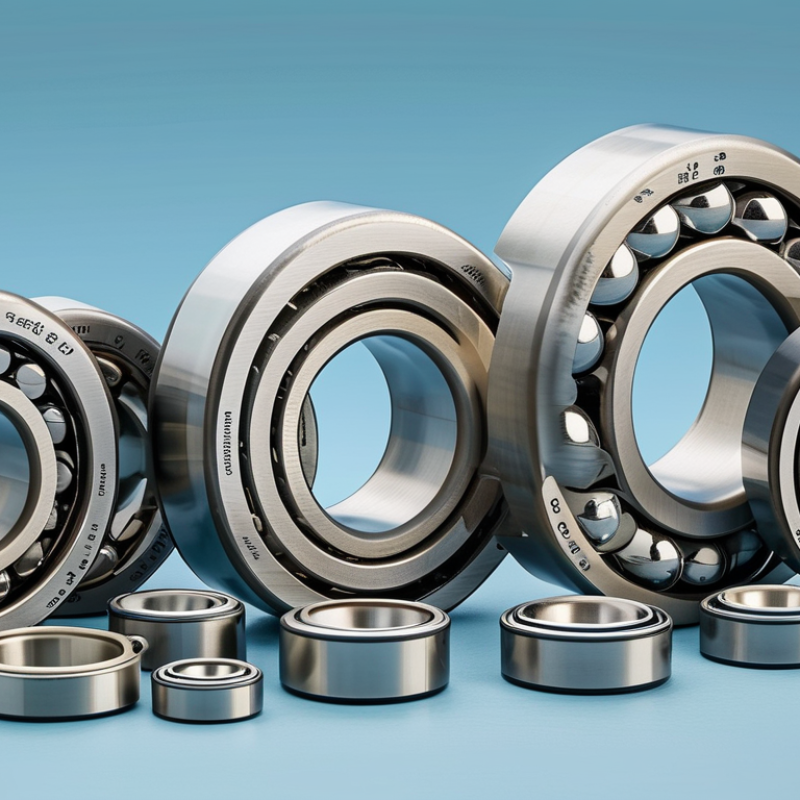
When selecting NTN needle bearings, it is essential to understand their components and functions. Needle bearings consist of cylindrical rollers, each with a small diameter. This design allows for a higher load capacity and reduced friction compared to other types of bearings. According to industry reports, the load capacity can increase by over 50% when using needle bearings. An essential distinction lies in the needle's length and diameter, which directly influences the bearing's performance.
One critical function of needle bearings is to accommodate radial loads. Their elongated shape provides better stability than traditional ball bearings. The assembly typically includes a cage to maintain proper spacing between the rollers. This configuration enhances durability, allowing for reduced wear over time. However, misalignment can lead to premature failure.
Tips: Always check the load ratings and ensure compatibility with your application. Consider environmental factors such as temperature and lubrication to optimize performance. Also, testing a sample before large-scale deployment is a prudent strategy. Remember, even slight miscalculations in sizing can result in inefficiencies. In the dynamically shifting landscape of engineering, the right choice can make a significant difference.
Key Specifications to Consider When Choosing NTN Needle Bearings
When selecting NTN needle bearings, key specifications play a crucial role. Load capacity is one of the main factors to consider. Each application has a different load requirement. Ensure the bearing can handle both dynamic and static loads effectively. Miscalculating this can lead to early failures.
Another important specification is the bearing's size and fit. The inner and outer diameters should match your component dimensions accurately. A poor fit can cause excess vibration or premature wear. Additionally, paying attention to the raceway design can enhance performance in specific applications.
Tips: Always check for tolerances and material quality. Components made from high-carbon chromium steel typically offer better durability. Consider your working environment too. Temperature and lubrication methods can affect bearing lifespan. It’s essential to reflect on these factors; overlooking them might result in costly downtime or damage.
Load Ratings and Their Importance in NTN Needle Bearing Selection
When selecting NTN needle bearings, understanding load ratings is crucial. Load ratings indicate the maximum load a bearing can handle. These values help in assessing the performance and durability of the bearing in specific applications.
High load ratings typically suggest a stronger bearing. However, choosing a bearing based solely on high load ratings can be misleading. Factors like speed and operating temperature also affect performance. It's essential to evaluate the entire operating environment. For example, a bearing may perform well under static loads but struggle under dynamic conditions. Balancing these factors can be challenging.
Bearings used in harsh conditions require careful consideration of load ratings. Overloading a bearing can lead to premature failure. It's crucial to refer to manufacturer guidelines. Yet, these guidelines are often generalized. Real-world applications may vary. Testing and feedback in actual operations can provide valuable insights.
How to Choose the Right NTN Needle Bearing for Your Needs? - Load Ratings and Their Importance in NTN Needle Bearing Selection
| Bearing Type |
Dynamic Load Rating (C) |
Static Load Rating (C0) |
Limiting Speed (rpm) |
Dimensions (mm) |
| Needle Bearing 1 |
12,000 N |
8,000 N |
15,000 rpm |
25 x 32 x 20 |
| Needle Bearing 2 |
15,000 N |
10,500 N |
12,000 rpm |
30 x 37 x 25 |
| Needle Bearing 3 |
20,000 N |
13,500 N |
10,000 rpm |
35 x 42 x 28 |
| Needle Bearing 4 |
18,000 N |
11,000 N |
9,000 rpm |
40 x 47 x 30 |
Material and Design Considerations for NTN Needle Bearings
When selecting NTN needle bearings, understanding material and design considerations is crucial. Needle bearings require precision-engineered materials to ensure durability and performance. Common materials include high-carbon steel and stainless steel. High-carbon steel offers strength and wear resistance, while stainless steel provides corrosion resistance. Industry reports indicate that bearings made from stainless steel can last up to 50% longer in corrosive environments compared to their carbon steel counterparts.
Design elements also play a significant role in the performance of needle bearings. The needle rollers’ dimensions influence both load capacity and friction. Thinner rollers can accommodate tighter spaces, but they may compromise load capacity. A recent study highlighted that needle bearings with optimized roller profiles achieved a 20% improvement in load distribution. This means better performance in demanding applications.
Another area to consider is lubrication. Proper lubrication impacts both longevity and functionality. Grease is often preferred for its ability to reduce friction and wear. Yet, not all lubricants are suitable for every application. Industry data suggests that choosing the right lubricant can reduce wear by up to 30%. Understanding these material and design aspects will set the foundation for selecting the appropriate needle bearing.
Common Applications of NTN Needle Bearings Across Industries
NTN needle bearings are essential in various industries, offering unique advantages for numerous applications. In automotive, they are widely used in engine components and transmissions, thanks to their high load capacity and compact design. According to industry reports, the global automotive bearings market is expected to grow significantly, driven by the increasing demand for lightweight and efficient components. In the aerospace sector, NTN needle bearings play a critical role in gear systems and landing gears, where reliability is paramount.
Another important application is in manufacturing machinery. These bearings support high-speed operation in conveyor systems and processing equipment. Reports indicate that the manufacturing sector continues to adopt advanced precision engineering, highlighting the role of energy-efficient bearings in reducing operational costs. However, users should consider the operating environment. Contamination is a common issue, which can diminish bearing performance.
Tip: Always assess your lubrication options based on the operating conditions. Proper lubrication can significantly enhance bearing life.
In robotics and automation, the demand for NTN needle bearings is increasing due to their versatility. They enable smooth movement in robotic joints and actuators. Notably, maintenance practices can impact bearing performance. Regular inspections help identify wear and tear before failure occurs.
Tip: Maintain a consistent routine for monitoring bearing conditions to prevent costly downtimes.