How to Choose Bearing Needles in 2026?
Choosing the right Bearing Needles in 2026 requires more than comparing diameter, length, and price. Modern machinery demands higher speed, quieter movement, reduced energy loss, and dependable service under changing loads. A needle that performs well in a clean gearbox may fail quickly inside a dusty agricultural actuator. The details matter.
Dr. Tedric A. Harris, a respected authority on rolling-bearing technology, emphasized a practical principle: “Bearing selection must begin with the application, not the catalog.” That advice still matters. Engineers should examine radial load, shock loading, rotation speed, shaft hardness, housing accuracy, lubrication, and available installation space. A few millimeters of misalignment can create uneven contact. The result may appear as heat, noise, or early surface fatigue.
Do not choose solely by the highest dynamic load rating. It can mislead. A compact Bearing Needles assembly may offer excellent capacity but require precise raceway geometry and reliable lubrication. In field service, contamination often matters more than laboratory ratings. Check seals, clearance, material hardness, and maintenance access before approval. Ask how the component will behave after months of vibration, temperature changes, and imperfect servicing.
This guide explains a practical selection process for 2026 applications. It compares design options, material choices, load calculations, lubrication methods, and common installation errors. Some recommendations may need adjustment. Real machines rarely behave perfectly. That is the point: good bearing selection combines published data with measured operating evidence and honest engineering judgment.
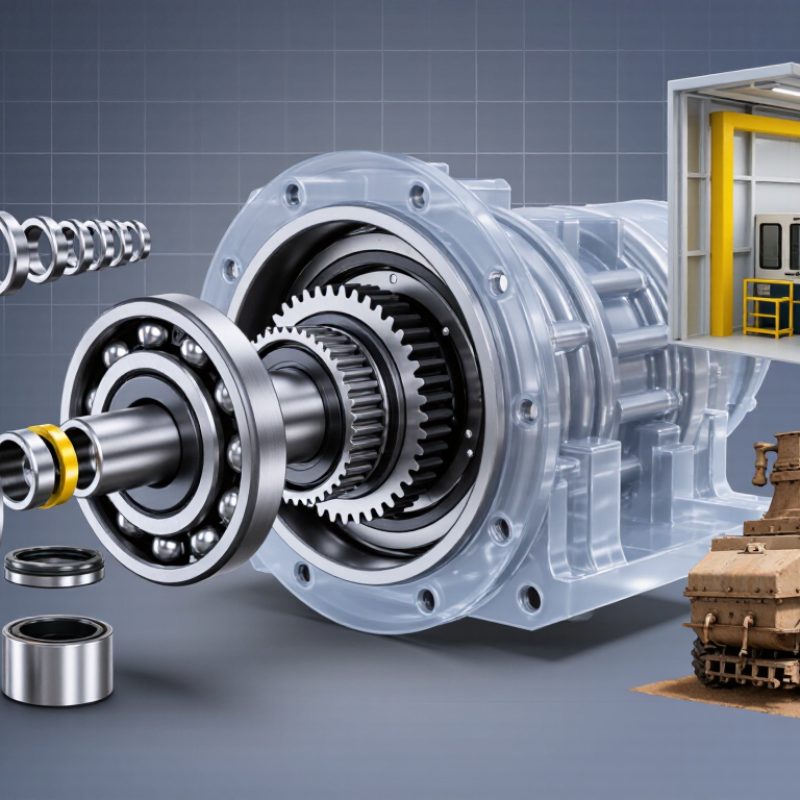
What Bearing Needles Are and How They Work
How to Choose Bearing Needles in 2026?
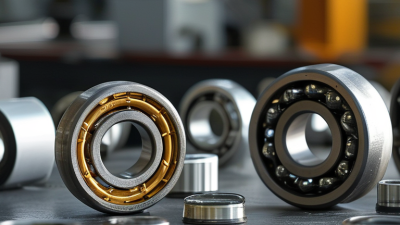
Bearing needles are slender cylindrical rollers used inside needle bearings. Their small diameter creates a large contact area between the shaft and raceway. This spreads radial loads across many rolling elements instead of concentrating force at one point.
The needles roll between hardened surfaces. A cage keeps them evenly spaced and reduces friction. Some designs use the shaft as an inner race, while others require a separate ring. During inspection, I check the roller surface for lines, dents, or dull patches. Even a small mark can increase heat and noise. Lubrication forms a thin film between moving surfaces. Without enough lubricant, metal contact can damage the raceway quickly.
Choosing the right needles requires more than matching dimensions. Measure roller diameter, length, clearance, load, speed, and operating temperature. Consider shock loads and slight shaft misalignment too. A catalog rating can mislead if contamination or poor lubrication is ignored. Seals may help in dusty equipment, but they can also increase friction. In 2026, digital calculators can compare fatigue life and speed limits quickly, yet I still verify measurements with calibrated tools. Real assemblies are rarely perfect. Clean installation matters. A crooked cage can create uneven loading, even when the selected needle size appears correct.
How to Choose Bearing Needles in 2026? – What Bearing Needles Are and How They Work
| Selection Dimension | What the Needle Bearing or Roller Is | Typical Engineering Data | How It Works | Recommended Choice Criteria |
|---|---|---|---|---|
| Basic construction | A needle bearing uses long, thin cylindrical rollers with a diameter that is relatively small compared with their length. | Needle rollers commonly have a length-to-diameter ratio of approximately 3:1 to 10:1. Actual limits depend on the bearing series and application. | The rollers reduce sliding friction by creating rolling contact between the shaft and the housing or raceway. | Use a needle design when high radial load capacity is needed within a small radial cross-section. |
| Load direction | Most radial needle roller bearings are designed primarily for loads perpendicular to the shaft axis. | Radial load capacity is specified by the bearing's basic dynamic load rating, static load rating, and effective raceway length. | The load is distributed across several rollers, reducing contact stress compared with a single sliding surface. | For axial loads, use a thrust needle roller bearing or a combined radial-thrust arrangement rather than a radial-only bearing. |
| Available bearing type | Common forms include drawn-cup bearings, machined-ring bearings, caged needle roller assemblies, and needle roller thrust bearings. | Drawn-cup designs generally have a thin outer shell. Machined-ring designs use thicker rings and can support higher loads or more demanding mounting conditions. | The cage spaces the rollers evenly and prevents roller-to-roller rubbing. Full-complement designs contain more rollers but may generate more friction. | Choose the type according to available space, housing strength, speed, lubrication, load, and whether a hardened shaft or separate raceway is available. |
| Radial space | Needle bearings are recognized for a small radial section compared with many other rolling-bearing designs. | Thin-section needle bearings can have a radial cross-section of only a few millimetres, depending on bore size and series. | A relatively small roller diameter allows the bearing to carry radial load without requiring a large outside diameter. | Measure the shaft diameter, housing bore, and available bearing width before selecting the roller diameter or bearing series. |
| Needle roller diameter | The roller diameter is the nominal diameter of each cylindrical needle. | Common industrial needle roller diameters are approximately 1.5–6 mm, although smaller and larger sizes are available in specialized series. | Smaller rollers reduce radial section; larger rollers generally provide greater stiffness and contact area when space permits. | Do not select by roller diameter alone; verify the bearing load rating, roller length, internal clearance, and raceway hardness. |
| Roller length and effective raceway length | Roller length is the usable cylindrical contact length. The effective raceway length is the portion carrying load. | Longer effective contact length usually increases radial load capacity, provided alignment and lubrication are adequate. | A longer contact zone spreads the load over a greater area and lowers local pressure. | Select sufficient width for the calculated load, but avoid unnecessary width if shaft deflection or misalignment is present. |
| Speed capability | Speed capability depends on roller size, cage design, lubrication, load, operating temperature, and bearing accuracy. | Caged needle bearings generally run at higher speeds than full-complement designs because the cage reduces roller-to-roller contact. | At high speed, frictional heat, cage guidance, lubricant shear, and centrifugal effects become increasingly important. | For high-speed service, prefer a suitable caged design, confirm the limiting-speed value, and provide appropriate lubrication and heat dissipation. |
| Raceway and shaft requirements | In some assemblies, the shaft and housing act as the inner and outer raceways instead of using separate bearing rings. | Raceways normally require controlled hardness, surface finish, roundness, and adequate dimensional accuracy; exact values depend on the bearing design. | A hardened, smooth raceway prevents plastic indentation, excessive wear, and premature fatigue damage. | Use a separate hardened race ring when the shaft or housing cannot provide the required hardness, geometry, or surface finish. |
| Internal clearance and fit | Internal clearance is the movement available between the assembled rolling elements and raceways before operation. | Operating clearance changes with interference fits, shaft and housing expansion, temperature, load, and manufacturing tolerances. | Too little clearance can cause overheating and seizure; too much clearance can increase noise, vibration, and load concentration. | Select shaft and housing fits from the bearing manufacturer's tolerance recommendations and check the assembled operating condition. |
| Lubrication | Needle rollers require a suitable lubricant film to limit metal-to-metal contact, friction, wear, and heat. | Grease is common for moderate speeds and sealed systems; oil is often preferred for higher speeds or improved heat removal. | The lubricant separates contacting surfaces and helps carry away heat and wear particles. | Choose lubricant viscosity, quantity, and replenishment interval according to speed, load, temperature, contamination, and sealing. |
| Temperature range | Operating temperature is limited by the steel, cage material, seals, lubricant, and dimensional changes caused by heat. | Many standard bearing steels can tolerate temperatures well above 100 °C, but allowable continuous temperature depends strongly on lubricant and cage design. | Thermal expansion changes clearance and may reduce lubricant viscosity, affecting friction and bearing life. | Check the complete temperature limit of the assembly rather than relying only on the steel's temperature capability. |
| Sealing and contamination | Seals or shields help retain lubricant and block dust, water, and abrasive particles from entering the rolling contact. | Sealed designs improve contamination resistance but can produce additional friction and have a lower speed or temperature limit than open designs. | A clean lubricant film protects the raceway from indentations and abrasive wear. | Use seals in dirty or wet environments, and use external sealing or a clean enclosure when the bearing must operate at higher speed. |
| Misalignment and deflection | Standard needle roller bearings usually have limited ability to accommodate angular misalignment. | Shaft bending, housing distortion, and mounting errors can create uneven roller loading and edge stress. | Misalignment tilts the rollers and concentrates contact near the raceway edges, reducing fatigue life. | Improve housing and shaft rigidity, align the components accurately, or select a design specifically intended for limited misalignment. |
| Service life calculation | Rolling-bearing life is normally evaluated using the basic rating life, commonly expressed as L10 life. | For roller bearings, the basic rating-life relationship is commonly expressed as L10 = (C/P)10/3, where C is the basic dynamic load rating and P is the equivalent dynamic load. | The exponent shows that a moderate increase in applied load can cause a large reduction in calculated fatigue life. | Calculate life using the actual radial and axial load history, speed, lubrication, contamination, temperature, and reliability requirement. |
| Installation and maintenance | Needle bearings are sensitive to impact, contamination, incorrect press-fit force, and damage to the rollers or cage. | Installation should use the specified tooling, mounting direction, fit, lubricant, and cleanliness controls. | Correct installation keeps the bearing concentric and prevents brinelling, cage deformation, raceway damage, and premature noise. | Verify shaft and housing dimensions, deburr mounting features, apply force only to the fitted ring, and inspect lubrication and sealing before operation. |
Related Posts
-

China Top Ina Needle Bearing Supplier for Global Buyers?
-
10 Best Needle Bearings for Optimal Performance in Industrial Applications
-
How to Choose the Right SKF Needle Bearing for Your Project?
-
What is Ntn Needle Bearing and How to Choose the Right One?
-

How to Choose the Right Rear Ball Bearing for Your Needs?
-
2026 Top Mini Wheel Bearing Types for Global Buyers?