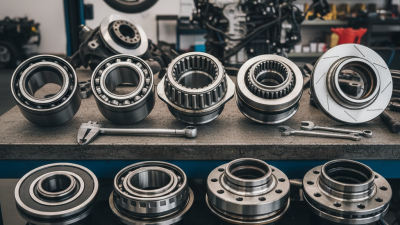
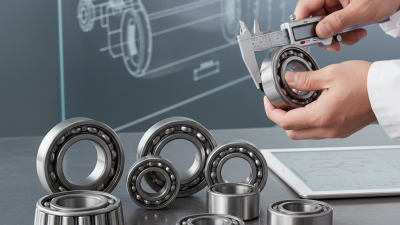
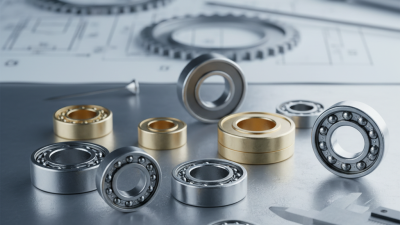
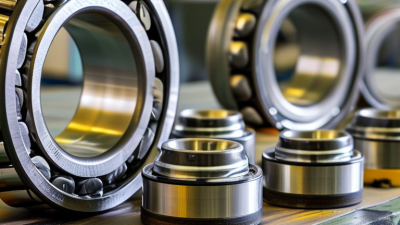
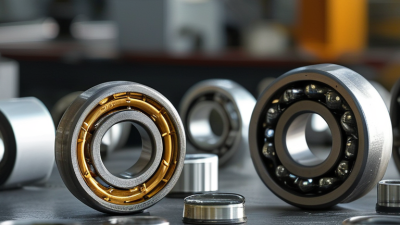
Choosing the right bearing can determine whether a machine runs quietly or stops without warning. A Skf Needle Bearing offers high load capacity within a compact radial space. That advantage matters in gearboxes, pumps, textile equipment, and vehicle assemblies. Yet, selecting a bearing by size alone is a common mistake.
This guide reviews seven SKF needle bearings suited to demanding applications in 2026. Each option is assessed through load ratings, speed limits, lubrication needs, sealing, mounting style, and expected service conditions. Manufacturer catalog data provides the technical foundation. Practical maintenance experience adds another layer, especially around shaft finish, housing accuracy, and contamination control. A small steel needle bearing may look simple on a workbench. Its performance depends on every surrounding component.
No bearing wins every test. Some models favor higher loads, while others support easier installation or better protection from dust. The best choice may change after temperature, shock, or misalignment enters the equation. That detail deserves attention. Product availability and regional specifications can also vary, so current SKF documentation should confirm each final selection. The comparisons aim to support engineers, maintenance teams, and informed buyers with clear, defensible guidance. They do not replace application calculations or professional inspection. Mistakes still happen, particularly when lubrication intervals receive little attention. That is where careful review can prevent expensive downtime.
Needle bearings use long, thin rollers to support radial loads. Compared with ball bearings, they provide high load capacity in a smaller diameter. Their compact shape suits gearboxes, pumps, linkages, and space-limited shafts. Small package. High contact. The rollers run between a shaft or inner ring and an outer raceway. Load spreads along their length, but alignment still matters.
During a workshop inspection, look for polished tracks, dark lubricant, and raised edges. These marks can reveal overload, poor lubrication, or shaft movement. A needle bearing is not automatically durable. Dirt enters through weak seals. Even slight housing distortion can create uneven roller pressure. Installation needs a clean press, correct support, and no hammering on the rollers. That detail is often underestimated.
Selection depends on bore size, radial load, speed, temperature, and lubrication access. Drawn-cup types save space and cost, while machined-ring designs suit heavier service. Check the mating shaft hardness and surface finish, not only the bearing dimensions. Clearance deserves careful thought. Too little can cause heat; too much can increase vibration. I would question catalog-only choices, because real housings are rarely perfect. Measure the housing after cleaning, then confirm the fit under operating temperature.
When evaluating needle bearings, start with geometry, not marketing language. Confirm bore, outside diameter, width, and shaft fit against the machine drawing. A one-hundredth-millimeter error can create harsh running or premature wear. Check radial load capacity, limiting speed, internal clearance, and fatigue rating. ISO 281:2007 defines basic rating life as the operating life reached by 90% of identical bearings under stated conditions. That figure is useful, but it is not a guarantee for contaminated or poorly aligned machinery.
Lubrication deserves equal attention. The U.S. Department of Energy reports that motor-driven systems use about 23% of American electricity, so friction losses can become expensive across large equipment fleets. For each candidate, record grease or oil compatibility, temperature range, seal arrangement, cage material, and allowable misalignment. Manufacturer catalog values often assume clean conditions. Real workshops are less polite. Dust, shock loads, and interrupted lubrication may reduce service life sharply. I would also compare static safety factors, not only dynamic load ratings.
Tips: Measure the shaft at several points with a micrometer. Inspect the housing bore for taper. Keep a short test log covering noise, temperature, vibration, and lubricant condition. ISO 281 calculations can guide selection, but field evidence should challenge the calculation when results disagree. Do not ignore installation tools; pressing through the rolling elements can damage raceways before operation begins.
Seven Needle Bearings for Different Applications
Seven needle-bearing designs solve different space, load, and contamination problems. Open drawn-cup bearings suit compact transmissions with hardened shafts. Closed-end cups protect one side, useful in small pumps and linkage joints. Caged needle bearings reduce roller friction at higher speeds. Full-complement designs carry heavier loads, but they need better lubrication control. Machined-ring bearings tolerate greater shock and housing distortion. Thrust needle bearings manage axial loads beneath gears, cam followers, and rotating plates. Spherical-aligning versions help when slight shaft misalignment cannot be avoided.
The U.S. Department of Energy reports that motor-driven equipment can consume more than 60% of industrial electricity. That makes friction control a practical maintenance concern. ISO 281 defines L10 life as the point when 90% of identical bearings are expected to survive under specified conditions. Still, a catalog calculation is not enough. Dust, poor fits, and dry starts can shorten real service life sharply. I would recheck shaft hardness, lubricant viscosity, and clearance before selecting any design. A full-complement bearing may look stronger on paper. In a dirty agricultural gearbox, however, a caged option could remain more dependable. Small details matter.
Choosing the right needle bearing requires more than comparing load ratings. Start with the shaft diameter, housing space, radial load, speed, temperature, and lubrication method. A drawn-cup design suits compact assemblies with limited space. A machined-ring design offers greater stiffness and better control under heavier loads. For rotating shafts, check the basic rating life using ISO 281:2007. Its roller-bearing equation uses an exponent of 10/3, so small load changes can strongly affect service life.
According to Grand View Research’s 2024 bearing market report, the global bearing market is projected to grow at about 8.5% annually through 2030. That growth reflects rising demand for efficient motion systems, but market growth does not guarantee correct selection. In field inspections, contamination and poor lubrication often cause earlier failures than calculated fatigue. Check the dynamic load rating against the actual load, not the brochure’s maximum figure. Also verify internal clearance, shaft hardness, surface finish, and allowable misalignment. A perfect spreadsheet still misses installation damage. That deserves honest attention.
Tips: Keep the bearing and housing clean. Measure the shaft before ordering. Use the recommended lubricant quantity, not more. Confirm speed limits after considering temperature. If shock loads occur, select a higher static safety margin. When uncertainty remains, test one assembly under real duty cycles before approving seven options.
| No. | Needle Bearing Configuration | Representative Size (Bore × Outside Diameter × Width) |
Primary Load Direction | Typical Application | Main Advantages | Key Selection Criteria |
|---|---|---|---|---|---|---|
| 1 | Drawn-Cup Open Needle Roller Bearing | 20 × 26 × 16 mm | Radial | Compact gearboxes, pumps, small transmissions and general machinery | Thin outer shell, low radial section height and good load capacity for limited space | Check housing hardness, roundness, wall thickness, shaft surface finish and whether the shaft can serve as the raceway |
| 2 | Drawn-Cup Closed-End Needle Roller Bearing | 15 × 21 × 16 mm | Radial | Blind housings, pulley shafts, linkage assemblies and compact actuators | Seals one end of the bearing arrangement and simplifies designs where a through-shaft is not required | Confirm the closed-end clearance, axial stop arrangement, sealing needs and allowable operating temperature |
| 3 | Machined-Ring Needle Roller Bearing | 25 × 42 × 17 mm | Radial; limited axial guidance depending on design | Industrial gearboxes, construction equipment, compressors and high-load drives | Rigid rings, high radial load capability and better resistance to shock than many thin-section designs | Evaluate static load, dynamic load, shock loading, shaft deflection, internal clearance and mounting method |
| 4 | Needle Roller Bearing with Inner Ring | 25 × 37 × 17 mm | Radial | Applications where the shaft cannot be finished as a hardened raceway | Provides a dedicated inner raceway and can accommodate ordinary hardened or ground shafts | Compare available shaft diameter, inner-ring width, axial displacement, seal arrangement and shoulder dimensions |
| 5 | Needle Roller Thrust Bearing | 20 × 35 × 2 mm excluding race washers |
Axial | Screw mechanisms, clutches, axial gears and rotating thrust interfaces | Very low axial section height with high axial load capacity and low friction when correctly aligned | Use hardened, flat and parallel race washers; verify axial load, speed, lubrication and permissible misalignment |
| 6 | Self-Aligning Needle Roller Bearing | 20 × 32 × 20 mm | Radial | Long shafts, imperfect housings, agricultural equipment and structures with minor misalignment | Accommodates limited angular misalignment and reduces edge loading caused by shaft or housing deflection | Confirm allowable angular misalignment, radial load, housing support, shaft flexibility and sealing requirements |
| 7 | Stud-Type Needle Roller Cam Follower | 16 mm stud × 26 mm outside diameter × 12 mm width | Radial; track-contact load | Cam drives, linear guides, indexing systems and material-handling mechanisms | Integrates a rolling element and mounting stud for easy installation in follower-track mechanisms | Check track hardness, contact stress, stud strength, eccentric adjustment, lubrication and speed profile |
Installation, Lubrication, and Maintenance Considerations
Needle bearings reward careful installation. Begin with a clean bench, lint-free gloves, and accurate shaft measurements. Even a small burr can damage the rolling path during assembly. Check the housing bore for scratches, then remove protective oil before applying the specified lubricant. Press the bearing evenly. Never strike the cage directly.
Use a suitable mandrel that contacts the correct bearing ring. The fit depends on load direction, speed, and shaft expansion. Heating may help with some assemblies, but uncontrolled heat can alter material properties. Keep temperatures within the technical specification. Too much grease creates drag and heat. Too little leaves metal surfaces vulnerable. A thin, even film is usually safer than packing every cavity. Not always.
Lubricant selection should match speed, temperature, load, and sealing conditions. Mixing incompatible greases can cause softening, hardening, or separation. During operation, monitor housing temperature, unusual noise, vibration, and grease leakage. A simple inspection log can reveal gradual changes before failure occurs. Relubricate at the recommended interval, not merely when the bearing sounds dry. Contaminated lubricant needs immediate attention. In workshop inspections, poor cleaning has often caused more damage than heavy loads. That is worth reconsidering. Replacement also requires checking the shaft and housing, because installing a new bearing on worn surfaces may repeat the same failure.