10 Essential Tips for Choosing Ntn Needle Bearing Efficiently?
Choosing the right Ntn Needle Bearing is crucial for any machinery. As industry expert Dr. John Smith states, "Precision in bearing selection can enhance performance significantly." This emphasizes the importance of making informed decisions in your selection process.
In various applications, Ntn Needle Bearings play a vital role in reducing friction. They ensure smooth operation and longevity for numerous machines. However, the flood of options can be overwhelming.
Understanding the application needs is key. Not all Ntn Needle Bearings are the same. Factors like load capacity and operating conditions need attention. Failing to consider these might lead to performance issues. Therefore, it's essential to delve deep into the specifications. Seek insights beyond marketing hype to make a wise choice.
Understanding the Types of NTN Needle Bearings Available
When selecting NTN needle bearings, understanding the various types available is crucial. Needle bearings are designed with long, thin rollers to support high loads while minimizing space. They are ideal for applications with limited mounting space, such as in certain automotive and industrial machinery.
There are several variations of needle bearings, including caged and full complement types. Caged needle bearings use a cage to separate the rollers, offering enhanced stability and reduced friction. Meanwhile, full complement bearings carry more rollers, which can handle heavier loads. Each type has its strengths, making it important to consider your specific needs.
Choosing the right type of needle bearing requires careful analysis. High load capacity is key for demanding tasks, but space limitations cannot be overlooked. Think about your application’s requirements and potential challenges. Testing different types can provide insight, leading to better choices. Keep in mind that balancing load capacity and space efficiency is not always straightforward. It often requires adjustments and real-world evaluations to find the best fit.
Analysis of NTN Needle Bearing Types and Their Efficiency
Analyzing Application Requirements for Optimal Bearing Performance
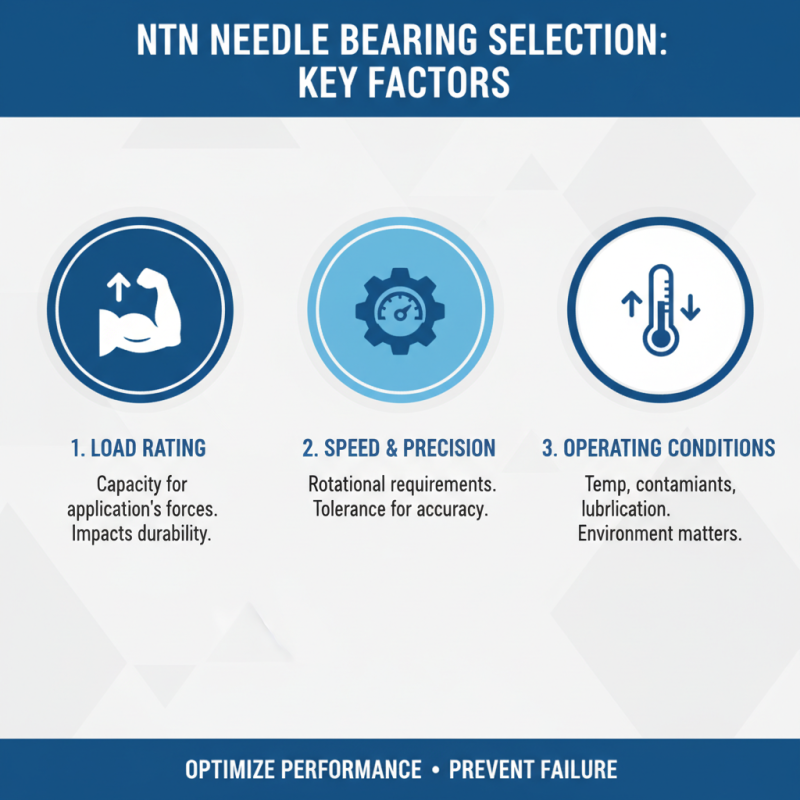
Choosing the right NTN needle bearing requires a deep understanding of your application's needs. Consider factors like load capacity, speed, and environmental conditions. These elements significantly influence the bearing's performance. For instance, high-load applications necessitate specific bearings designed for strength. Conversely, low-speed applications might prioritize efficiency over durability.
It's essential to analyze the operating conditions thoroughly. Temperature fluctuations and exposure to contaminants can degrade bearing performance. Look for materials that resist wear and tear in your specific environment. While it may seem easier to select a standard bearing, the right choice will yield better long-term efficiency.
Many engineers overlook the importance of maintenance. Regular checks can reveal potential issues early on. Neglecting this aspect can lead to unexpected failures. Reflect on your maintenance schedule and ensure it aligns with your operational demands. Always be prepared to adjust your strategy based on real-world performance.
Evaluating Load Capacity and Speed Specifications Carefully
When selecting Ntn needle bearings, evaluating load capacity is critical. Load capacity refers to the maximum weight a bearing can handle before failing. It is vital to match this to your application's requirements. Too low a capacity can lead to premature failure, while a higher capacity might be unnecessary, leading to increased costs.
Speed specifications are equally important. Bearings have rated speed limits. Exceeding this limit can cause heat buildup, damaging the bearing. Understanding the operational speeds in your application will help you select the right product. Sometimes, a compromise between load capacity and speed must be made. This is where careful analysis is necessary.
Look for signs of wear or inefficiency in existing bearings. Reflect on past experiences with similar products. Such insights can guide your choice, ensuring better performance. Relying solely on specifications can be risky. Balance your decisions with hands-on knowledge. The goal is to optimize performance while avoiding common pitfalls in bearing selection.
Importance of Quality Standards and Manufacturer Reputation
When selecting Ntn needle bearings, the quality of the manufacturer plays a crucial role. A reputable manufacturer will often adhere to industry standards. This can significantly impact the performance and longevity of the bearings. Look for certifications that indicate a commitment to quality. These guidelines ensure the products meet essential operational criteria.
To ensure efficient choice, assess the manufacturer's track record. Have they consistently delivered high-quality products? Reviews and feedback from other users can provide valuable insights. Additionally, engage with experts in the field. Their advice can help identify which manufacturers are truly reliable.
Another key aspect is understanding the specifications of the bearings. Know your application’s requirements. Do not simply settle for the cheapest option. Investing in well-made needle bearings can prevent costly operational issues later on. Remember to weigh cost against quality. It is often worth it to choose a trusted brand, even if the upfront costs are higher.