How to Choose the Right Mini Wheel Bearing for Your Projects
In the world of mechanical engineering and DIY projects, selecting the appropriate components can significantly impact the performance and longevity of a product. One such crucial component is the Mini Wheel Bearing, which is essential for applications requiring smooth rotation and reduced friction. According to Dr. James Thompson, an expert in bearing technology, “Choosing the right Mini Wheel Bearing not only ensures optimal performance but also enhances the overall efficiency of your project.”
With the vast array of mini wheel bearings available on the market today, it can be daunting to make an informed decision. Factors such as load capacity, material, and size are pivotal in determining the suitability of a bearing for specific applications. Understanding these elements will help you navigate the complexities of choosing the right Mini Wheel Bearing, ensuring that your projects operate seamlessly and achieve the intended results.
As we delve deeper into the intricate details of mini wheel bearings, we will explore the essential considerations and expert insights that can guide you toward making the best selection for your unique requirements. Whether you are a hobbyist or a seasoned professional, understanding the nuances of Mini Wheel Bearings can empower you to elevate the quality and performance of your creations.

Understanding Mini Wheel Bearings: Types and Functions
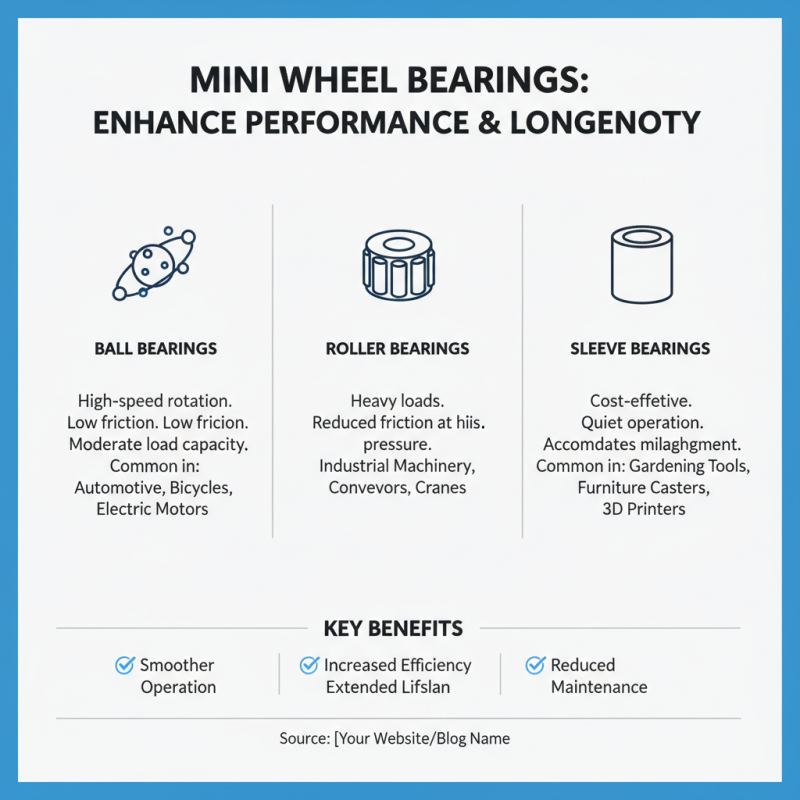
Mini wheel bearings are essential components in various applications, ranging from automotive to gardening tools. Understanding the types and functions of mini wheel bearings can significantly enhance the performance and longevity of projects. There are several types of mini wheel bearings, including ball bearings, roller bearings, and sleeve bearings, each serving a unique purpose based on load capacity, speed, and friction requirements. For instance, ball bearings are typically used in applications requiring high-speed rotation, while roller bearings are preferred for heavier loads due to their greater surface area.
Recent industry reports indicate that the global bearings market is projected to reach approximately $77 billion by 2026, driven by the increasing demand for advanced machinery and vehicles. This growth highlights the importance of selecting the right bearing type for specific needs, particularly as innovations like electric vehicles continue to advance. Advances in design and manufacturing techniques also mean that mini wheel bearings are becoming more efficient and capable of handling higher operational demands. For instance, developments in materials used for bearings enhance their durability and resistance to wear, which is crucial for maintenance-free applications in various fields. Understanding these factors is essential for any project aiming for reliability and performance.
Key Factors to Consider When Selecting Mini Wheel Bearings
When selecting mini wheel bearings for your projects, several key factors come into play to ensure optimal performance and compatibility. First, consider the load capacity of the bearing. It’s essential to assess the weight and forces that the bearing will need to support during operation. A bearing with a higher load capacity will generally provide better durability and longevity, especially in applications involving heavy or dynamic loads.
Another crucial aspect to examine is the bearing material. Mini wheel bearings are often made from various materials such as steel, ceramic, or plastic, each offering distinct advantages based on the application. Steel bearings are commonly favored for their strength and reliability, while ceramic bearings are lighter and resistant to corrosion, making them ideal for environments exposed to moisture.
Additionally, consider the bearing's inner and outer diameters and its overall dimensions to ensure a perfect fit with your project specifics.
Assessing Load Capacity and Speed Requirements for Your Project
When choosing the right mini wheel bearing for your project, it's crucial to assess the load capacity and speed requirements. The load capacity is vital because it determines how much weight the bearing can support without failure. According to the American Bearing Manufacturers Association (ABMA), selecting a bearing with a higher than necessary load capacity can extend the lifespan of your project, as bearings that operate below their load limits tend to wear less over time.
Speed requirements also play a significant role. Bearings are rated for specific speed limits, and exceeding these can lead to overheating and premature failure. The ABMA provides guidelines stating that for every 10°C increase in operating temperature, the bearing life can be cut in half. Therefore, it's essential to consider both static and dynamic load ratings to ensure that the bearing operates efficiently within the project's operational parameters.
**Tip:** Always consult the manufacturer's specifications to understand your chosen bearing's load capacity and speed ratings fully.
**Tip:** If in doubt, it's safer to opt for a bearing with a higher load rating than you need rather than risking underperformance in high-demand applications.
Material Choices: Which Type of Bearing Material is Best?
When choosing the right mini wheel bearing for your projects, material selection is critical. The most common materials used for wheel bearings include stainless steel, chrome steel, and plastic. Stainless steel is highly resistant to corrosion and is ideal for applications exposed to moisture or harsh environments. A study from the Bearings Specialists Association indicates that stainless steel bearings can have a lifespan that is 30% longer than their chrome steel counterparts under corrosive conditions.
Chrome steel bearings, on the other hand, are often favored for their superior hardness and wear resistance, making them an excellent choice for high-load applications. According to recent data from the International Bearing Industry Association, chrome steel bearings can withstand up to 5,000 hours of operation under heavy load conditions without significant degradation.
**Tip:** Always consider the operating environment and load expectations for your project when selecting bearing materials. If your application involves high humidity or contact with chemicals, opt for stainless steel. For heavy-duty scenarios, chrome steel will be your best bet for durability and performance. Additionally, plastic bearings offer a lightweight and cost-effective option for low-load applications where corrosion resistance is required, particularly in industries like food processing.
How to Choose the Right Mini Wheel Bearing for Your Projects - Material Choices
| Material Type |
Advantages |
Disadvantages |
Best Use Case |
| Steel |
High strength, good wear resistance |
Prone to rusting if not properly maintained |
Heavy-duty applications |
| Ceramic |
Lightweight, corrosion-resistant |
More brittle than metal |
High-performance applications |
| Plastic |
Corrosion-resistant, lightweight |
Lower load capacity |
Applications in wet environments |
| Stainless Steel |
Resistant to corrosion, robust |
Higher cost compared to regular steel |
Marine and food processing industries |
| Bronze |
Excellent resistance to wear and corrosion |
Higher density, more expensive |
Heavy-load applications |
Installation and Maintenance Tips for Mini Wheel Bearings
When installing mini wheel bearings, proper alignment and cleanliness are essential for optimal performance. Begin by ensuring that the surfaces are free of dust and debris, as any contaminants can lead to premature wear or failure. Use a proper bearing press or a soft mallet to avoid damage during installation. Make sure the bearing is seated evenly and securely in the housing, checking for any misalignment that could cause uneven wear when the wheel is in motion.
Regular maintenance of your mini wheel bearings can significantly extend their lifespan. It is advisable to inspect them periodically for signs of wear, corrosion, or any unusual noise during operation. Lubrication is vital; use the manufacturer-recommended grease or oil to keep them functioning smoothly. Depending on the usage frequency, consider repacking the bearings with fresh lubricant every few months to ensure they remain in top condition. This proactive approach will help maintain the efficiency of your projects and prevent costly downtimes.