How to Choose the Right Cushion Bearing for Your Project Needs
In today’s engineering landscape, the selection of the appropriate cushion bearing for specific project requirements is paramount. These components, designed to absorb shock and reduce vibration, play a critical role in ensuring the longevity and performance of various machinery and structures. As noted by industry expert Dr. Emily Carter, "The right cushion bearing can make all the difference between project success and unforeseen complications." This highlights the necessity for careful consideration during the selection process, as the right choice not only enhances operational efficiency but also minimizes maintenance costs.
Cushion bearings come in various forms and materials, each tailored to meet unique functional demands. Understanding the distinctions between these options requires a blend of technical knowledge and practical application insight. This guide aims to provide clarity on how to assess and choose the right cushion bearing for your specific needs, ensuring that professionals can make informed decisions that align with their project goals. Whether it is for heavy machinery, automotive applications, or structural supports, having a comprehensive understanding of cushion bearings will lead to better engineering outcomes and a smoother operational flow.

Understanding the Different Types of Cushion Bearings in Engineering Applications
Cushion bearings are essential components in many engineering applications, providing support and flexibility to accommodate various loads and movements. The most common types of cushion bearings include elastomeric bearings, spherical bearings, and sliding bearings. Elastomeric bearings utilize rubber or other flexible materials to absorb shock and vibrations, making them ideal for applications where movement and dampening are crucial, such as bridges and buildings. These bearings effectively reduce noise and prolong the lifespan of structures by accommodating minor misalignments.
Spherical bearings, on the other hand, allow for angular movement in multiple directions. They consist of a spherical surface that enables rotation and is often used in applications where there are significant differential movement and angular misalignment, such as in heavy machinery and automotive systems. Finally, sliding bearings, which often feature low-friction surfaces, are designed for applications that require smooth and linear movement with minimal wear over time. Understanding the specific requirements of your project, such as load capacity, movement types, and environmental factors, is essential in selecting the most suitable cushion bearing type for optimal performance and durability.
Key Factors to Consider When Selecting Cushion Bearings for Projects
When selecting cushion bearings for your project, several key factors must be considered to ensure optimal performance and longevity. One of the primary considerations is the load capacity of the bearings. According to the Journal of Mechanical Engineering, the correct load bearing capacity is crucial as it significantly influences durability and operational efficiency. It is essential to match the bearing's load rating to the application's anticipated loads to prevent premature failure. For instance, in heavy industrial applications, selecting cushion bearings with a load rating that exceeds the maximum operational load by at least 20% is often recommended.
Another factor to account for is the operational environment where the bearings will be utilized. Temperature variations, exposure to moisture, and chemical interactions can drastically affect the performance of cushion bearings. Research indicates that nearly 30% of bearing failures in harsh environments can be attributed to environmental factors that compromise the integrity of the bearing. Moreover, considering material selection is vital; bearings made from corrosion-resistant materials or those optimized for specific conditions tend to last longer and perform better under stress. Therefore, evaluating the material properties and environmental factors can lead to improved reliability and reduced maintenance costs throughout the project’s lifecycle.
Evaluating Load Capacity and Performance Standards for Cushion Bearings
When selecting cushion bearings for a project, it's essential to evaluate both their load capacity and performance standards to ensure they meet the specific requirements of your application.
Load capacity refers to the maximum load that a bearing can support while maintaining its integrity and functionality. It is crucial to assess the operational conditions, including the weight of the structures or machinery involved, as well as any dynamic loads that might occur during operation. Understanding these factors will help you choose a cushion bearing that provides both safety and durability under the expected load conditions.
In addition to load capacity, performance standards play a vital role in the selection process. These standards encompass various factors such as temperature tolerance, movement range, and environmental resistance. Depending on the application, some cushion bearings may need to withstand extreme temperatures or exposure to chemicals. Therefore, it's important to review relevant performance metrics, such as speed ratings and friction levels, which directly impact the efficiency and lifespan of the bearing. By carefully evaluating these criteria, you can ensure that your chosen cushion bearing will not only support the required loads but also perform reliably throughout its service life.
Material Selection: How It Impacts Cushion Bearing Durability and Efficiency
The material selection for cushion bearings plays a critical role in determining both their durability and efficiency. Typical materials used in cushion bearings include various metals, plastics, and composite materials, each imparting unique properties. For instance, metallic bearings are often favored for their strength and heat resistance, making them suitable for high-load applications. On the other hand, plastic materials can provide excellent dampening properties and are lighter, which can enhance energy efficiency. Careful consideration of the operating environment, including temperature and load requirements, is essential in selecting the right material to ensure longevity and robust performance.
Additionally, the surface finish and treatment of the materials can further influence the bearing's overall effectiveness. Smoother finishes can reduce friction and wear over time, which is paramount in high-speed applications. Similarly, coatings can enhance the wear resistance of metals, allowing them to perform better in abrasive situations. Ultimately, a thorough understanding of the operational demands and the characteristics of different materials will guide engineers and project managers in choosing the most suitable cushion bearing that meets their specific project needs, ensuring optimal performance and reliability.
Industry Standards and Regulations Affecting Cushion Bearing Selection
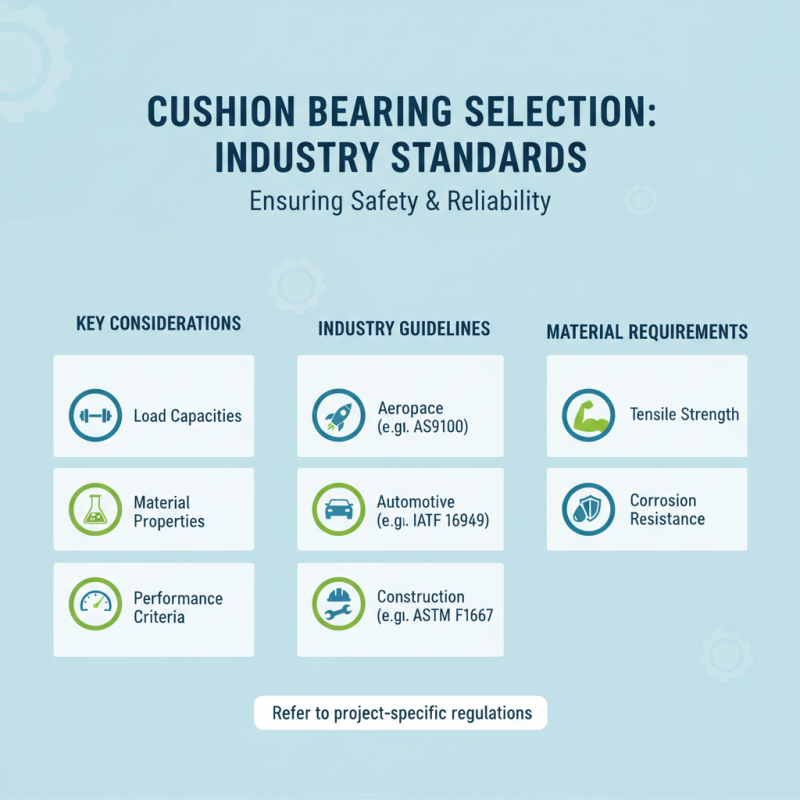
When selecting cushion bearings for specific projects, it's vital to consider the relevant industry standards and regulations that may influence your choice. These standards often provide specifications related to load capacities, material properties, and performance criteria. Different industries, such as aerospace, automotive, and construction, have established guidelines to ensure safety and reliability. For instance, materials used for cushion bearings must typically meet certain tensile strength and corrosion resistance criteria, depending on the operating environment and expected load conditions.
Moreover, adherence to these standards is not merely a regulatory requirement but is crucial to achieve optimal performance and longevity of the bearing system. Understanding the certification processes associated with cushion bearings can also help in the selection process. Compliance with organizations such as ASTM or ISO can indicate that a product has been rigorously tested and meets industry benchmarks. By prioritizing these regulations and standards during the selection process, engineers and project managers can make informed decisions that contribute to the overall success of their projects while ensuring safety and functionality.